Fractional Video Editing Teams:The "System" vs. The "Person"
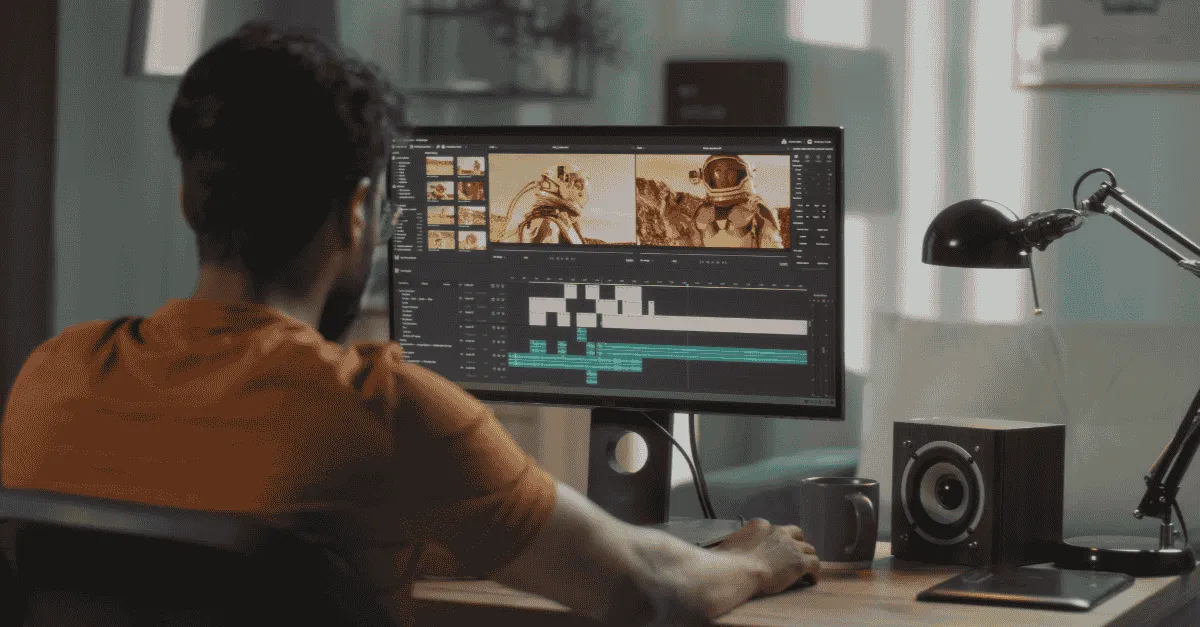
Relying on a single dedicated video editor creates a "Single Point of Failure" for your content production. A fractional video editing team uses a "Pod" model for system redundancy and diverse, full-stack capabilities. This structure allows the team to work in parallel, bypassing the sequential limitations of a single person. The result is consistently fast 12-24 hour turnaround times, often lowering the true cost per video.
Fractional Video Editing Teams:The "System" vs. The "Person"
What is a fractional video editing team?
A fractional video editing team is a subscription model where businesses access a "Pod" of creatives (Lead Editor, Assistant, Manager) for a flat monthly fee, rather than hiring a single dedicated freelancer.
Unlike a "dedicated editor" (who has sick days and skill gaps), a fractional team provides redundancy, 24/7 coverage, and diverse skill sets (motion graphics + storytelling) without the overhead of a full-time hire.
Key Takeaways
-
The "Bus Factor" Risk: Relying on a single "dedicated editor" creates a Single Point of Failure. If they get sick, take a vacation, or burn out, your content production halts immediately.
-
The "Pod" Solution: A Fractional Video Editing Team assigns you a "Pod" (Lead Editor, Assistant, and Project Manager). This ensures redundancy:if one person is unavailable, the system keeps moving.
-
Sequential vs. Parallel: A single freelancer must edit sequentially (Ingest,Cut, Export). A Fractional Team works in parallel (Assistant preps while Lead cuts), achieving 12-hour turnaround times.
-
Full-Stack Capabilities: No single human is an expert in sound design, motion graphics, and storytelling. A Fractional Team gives you access to specialized experts for the price of one generalist.
-
Velocity = Value: While a Fractional Team has a higher monthly fee than a cheap freelancer, the Cost Per Video is often lower because the team delivers 3x the volume of a single person.
The "Dedicated Editor" promise sounds perfect on paper.
You pay a flat fee, you get assigned one specific person (let's call him "Dave"), and Dave handles all your video needs. It feels personal. It feels safe.
Until Dave gets the flu during your launch week.
Or Dave decides to go on a two-week vacation.
Or Dave simply burns out because you asked for five Reels and a YouTube video in the same week, and he physically cannot edit that fast.
This is the "Single Point of Failure" problem.
In 2026, content consistency is the lifeblood of your business. If your editing stops, your marketing stops. Relying on a single human, whether a freelancer or a "dedicated editor" from a traditional agency, is a risk your revenue cannot afford.
The solution isn't to hire more freelancers; it's to switch to a fractional video editing team.
This concept is the engine behind our broader Guide to Outsourcing Video Editing in 2026, which outlines the macro strategy for scaling production.
The "Bus Factor": The Hidden Risk of a Dedicated Video Editor
In software engineering, there is a concept called the "Bus Factor." It asks: How many team members would have to get hit by a bus for the project to stall?
With a dedicated video editor (the model used by many of our competitors), your Bus Factor is 1.
If that one person vanishes, you are back to square one. You have to re-brief a new editor, re-explain your style, and wait for them to catch up. Meanwhile, your YouTube channel goes dark.
The Skill Gap Bottleneck
Beyond availability, there is the issue of capability.
-
Can your dedicated editor tell a great story? (Likely yes).
-
Are they also an expert in After Effects motion graphics? (Maybe).
-
Are they also an audio engineer who can fix bad mic noise? (Unlikely).
-
Can they color grade log footage perfectly? (Rarely).
When you hire a "Person," you are capped by their specific skill set. When you hire a Fractional Team, you get a "Full Stack" capability.
The Solution: The "Fractional Team" (Pod) Model
At Editing Machine, we moved away from the 1-to-1 model because it doesn't scale. Instead, we pioneered the Pod System.
When you sign up, you aren't assigned an "Editor." You are assigned a Pod.
How the Pod Works
-
The AI Assistant (Speed): The moment you upload footage, our video editing system uses AI to transcribe, sync audio, and remove dead air. This happens instantly.
-
The Assistant Editor (Assembly): A human junior editor organizes the project, selects the best takes, and handles the "grunt work."
-
The Lead Editor (Creativity): A senior creative steps in to handle the pacing, humor, B-roll selection, and narrative flow.
-
The Project Manager (Quality): A final set of eyes reviews the video against your Brand Bible before you ever see it.
The Result: 12-Hour Turnaround
Because the work is split, we can move parallel. A single "dedicated editor" has to do steps 1-4 sequentially. A Pod does them simultaneously.
This is how we deliver drafts in 12-24 hours, while "dedicated" competitors often take 48-72 hours.
Cost Comparison: Freelancer vs. Dedicated vs. Team
Is an outsourced video team more expensive than a solo freelancer? On the surface, perhaps. But when you factor in reliability and speed, the value equation shifts.
Feature | Freelancer (Upwork) | "Dedicated Editor" Agency | Fractional Team (Editing Machine) |
Reliability | Low (Ghosting Risk) | Medium (Single Point of Failure) | High (System Redundancy) |
Skill Set | Limited to one person | Limited to one person | Full Stack (Motion + Audio + Story) |
Availability | Weekdays (9-5) | Weekdays (9-5) | 24/5 (Global Timezones) |
Turnaround | 2-4 Days | 24-48 Hours | 12-24 Hours |
Scalability | Impossible | Hard (Wait in queue) | Seamless (Add more pods) |
Real World Example: The High-Ticket Coach
Let’s look at a specific scenario to see why the "Person" model fails.
The Scenario:
A Business Coach runs a webinar on Tuesday. They want to repurpose that webinar into:
-
One YouTube video (posted Thursday).
-
Five vertical clips for Reels (posted daily).
The "Dedicated Editor" Failure:
The editor receives the 1-hour file on Wednesday morning. They spend all Wednesday watching it and cutting the YouTube video. They finish Thursday afternoon. They haven't even started the Reels yet. The Coach misses their daily posting streak on Instagram for three days straight.
The "Fractional Team" Success:
The Pod receives the file.
-
The Assistant pulls the 5 clips for Reels immediately.
-
The Lead starts cutting the YouTube story simultaneously.
-
Result: The YouTube video and the first 3 Reels are delivered by Thursday morning.
The Coach maintains their omnipresence. The system worked.
The "Style Download": How a Pod Learns Your Brain
One of the biggest hesitations clients have when switching from a dedicated video editor to a fractional video editing team is the fear of losing their "voice."
“Dave knows that I hate jump cuts. If I switch to a team, do I have to explain that to three different people?”
The answer is no. In a Fractional Team model, you do not teach the people; you teach the System.
The Onboarding Protocol (The "Black Box" Concept)
When you hire a freelancer, the knowledge of your brand lives in their head. If they leave, that knowledge leaves with them.
When you hire a Fractional Team, the knowledge lives in a Centralized Style Engine.
During your first week with a Pod, we execute a "Style Download":
-
The Negative Constraint List: It is often easier to define what you hate than what you like. Do you hate stock footage? Do you despise heavy sound effects? We hard-code these "Negative Constraints" into your project dashboard.
-
The Asset Ingestion: We don't just ask for your logo. We ask for your "Golden Files" (the three previous videos you are most proud of).
-
The AI Style Match: Our system analyzes your Golden Files to determine your average Average Shot Length (ASL), your typical audio levels, and your color grading preferences.
This data is stored in the Pod’s shared workspace. Whether the Lead Editor or the Assistant Editor opens your project, they see a pop-up checklist: "Client hates jump cuts. Client uses Montserrat Bold. Client prefers lofi-hip hop music."
The result? Institutional Memory. You never have to repeat yourself, even if we swap a team member.
The Hidden Role: The Project Manager (Your Firewall)
In the Freelancer/Dedicated model, YOU are the Project Manager.
You are the one checking Dropbox links. You are the one reminding them that the deadline is Tuesday, not Thursday. You are the one spotting that the music is too loud.
This is the "Management Tax" we discussed earlier. It costs you 5-10 hours a week.
In the Fractional Team model, a Project Manager (PM) is included in your subscription.
The PM as Quality Control (QC)
The PM is your firewall. Their job is to protect you from seeing a "V1" draft that isn't ready.
Before a video link is ever sent to you, the PM reviews it against your Style Engine.
-
Did the editor use the right logo outro?
-
Is the caption spelling correct?
-
Is the export in 4K?
If the answer is "no," the PM sends it back to the Pod for a revision. You never see the mistake. You only see the polished version. This creates a "Zero-Friction" feedback loop where you spend time reviewing creativity, not catching typos.
Communication Architecture: Async vs. Sync
A dedicated video editor usually relies on "Sync" communication. They want to hop on a Zoom call to discuss the vibe. They text you on WhatsApp asking where the file is. This interrupts your "Deep Work" state.
A fractional video editing team operates on "Async" communication.
The Dashboard Workflow
We replace "Can we hop on a call?" with CRM and relevant tool integrations.
-
Time-Stamped Feedback: Instead of emailing "At 2:03, change the music," you simply click on the video frame at 2:03 and type "Change music." The editor sees this marker inside their Premiere Pro timeline.
-
Status Transparency: You don't need to ask "Is this done?" You look at your dashboard.
-
Status: Ingestion (AI Assistant)
-
Status: Rough Cut (Assistant Editor)
-
Status: Polishing (Lead Editor)
-
Status: QC Review (Project Manager)
-
This architecture allows you to manage a high-volume video strategy in 15 minutes a day, rather than managing a freelancer in 2 hours a day.
Scaling Up: The "Multi-Pod" Strategy
What happens when you succeed?
You started with 3 videos a week. Now, your channel is blowing up, and you want to launch a second channel, a podcast, and post daily Shorts.
-
With a Freelancer: You have to fire them (they can't handle the volume) or go through the painful process of finding, vetting, and training a second stranger.
-
With a Dedicated Agency: You have to buy a second subscription and hope the second editor is as good as the first.
-
With a Fractional Team: You simply activate a Second Pod.
Because your "Style Engine" and Assets are already centralized in our platform, the Second Pod inherits all the knowledge of the First Pod instantly. There is no ramp-up time.
This is how enterprise brands scale content. They don't rely on "talent acquisition"; they rely on System Replication. Because you treat your video editing team as a scalable infrastructure rather than a collection of artists, you remove the growth ceiling on your content marketing.
Read our guide on White Label Video Editing for Agencies for more insights on scaling.
How to Evaluate Fractional Editor Pricing
When comparing services, do not just look at the monthly sticker price. You must calculate the Cost Per Published Minute.
If a "low cost" dedicated editor costs $500/mo but only delivers 4 videos because they are slow, your cost is $125 per video.
If a fractional video editing team costs $997/mo but delivers 19 videos because they utilize AI and parallel workflows, your cost is $52 per video.
Velocity lowers cost.
For a deeper dive on this math, read our breakdown on The Efficiency Equation: Why "Time-to-Publish" Matters More Than Cost-Per-Video.
In Conclusion
In the early days of a business, hiring a freelancer is a rite of passage. But as you scale, "dependence" becomes a liability.
You don't need a friend named Dave to edit your videos. You need a reliable, invisible engine that accepts raw footage and outputs polished assets every single day, regardless of who is sick or who is on vacation.
Don't rent a person's time. Rent a system's output.
Ready to install your Content Engine?
Stop relying on a single point of failure. Create an Account to meet your new Fractional Team at Editing Machine.
Frequently Asked Questions (FAQ)
Q: What is the difference between a dedicated editor and a fractional team?
A: A dedicated editor is one person assigned to your account (creating a single point of failure). A fractional video editing team is a "Pod" of multiple editors and managers sharing your workload, ensuring redundancy, specialized skills, and faster turnaround times.
Q: How much does a fractional video editing team cost?
A: Fractional editor pricing typically ranges from $200 to $997 per month for a pro subscription (Editing Machine). This is significantly cheaper than hiring a single full-time internal editor (~$5,000/mo + benefits/equipment).
Q: Is a fractional team faster than a freelancer?
A: Yes. A fractional team utilizes AI automation for grunt work and splits tasks between Lead and Assistant editors, often achieving 12-24 hour turnaround times, whereas a freelancer typically takes 48-72 hours to complete the same work.
More from the Blog
Video Content Repurposing: The 10x Multiplier Framework
Most content creators treat repurposing as something they do when they have time, which means they almost never do it. The 10x Multiplier Framework treats it as the default production model: every recording session is planned with repurposing built in from the start, and every edited asset points toward the next format. This guide covers the full framework and the specific formats each recording type should produce.
Shopify Product Video: The Editing Checklist That Lowers Bounce Rate
Adding a video to your Shopify product page is not the same as adding a video that lowers bounce rate and increases conversion. Most product videos on Shopify are too long, start too slowly, and are not optimized for silent autoplay on mobile. This editing checklist covers every decision that separates a product video that converts from one that gets scrolled past.
Dedicated Video Editor Service: When a Subscription Beats a Full-Time Hire
Most businesses that are considering hiring a full-time video editor have not run the real numbers. When you include benefits, equipment, software licenses, desk space, and management overhead, a full-time junior editor in the US costs $65,000 to $80,000 per year in total. This guide runs the full cost comparison and identifies the output threshold at which a subscription service wins on economics.
See if Editing Machine is the right fit for your content.
Take 90 seconds to tell us about your goals, content style, and volume. We'll show you which setup fits and exactly where to start.