White Label Video Editing for Agencies: Protecting Your Margins
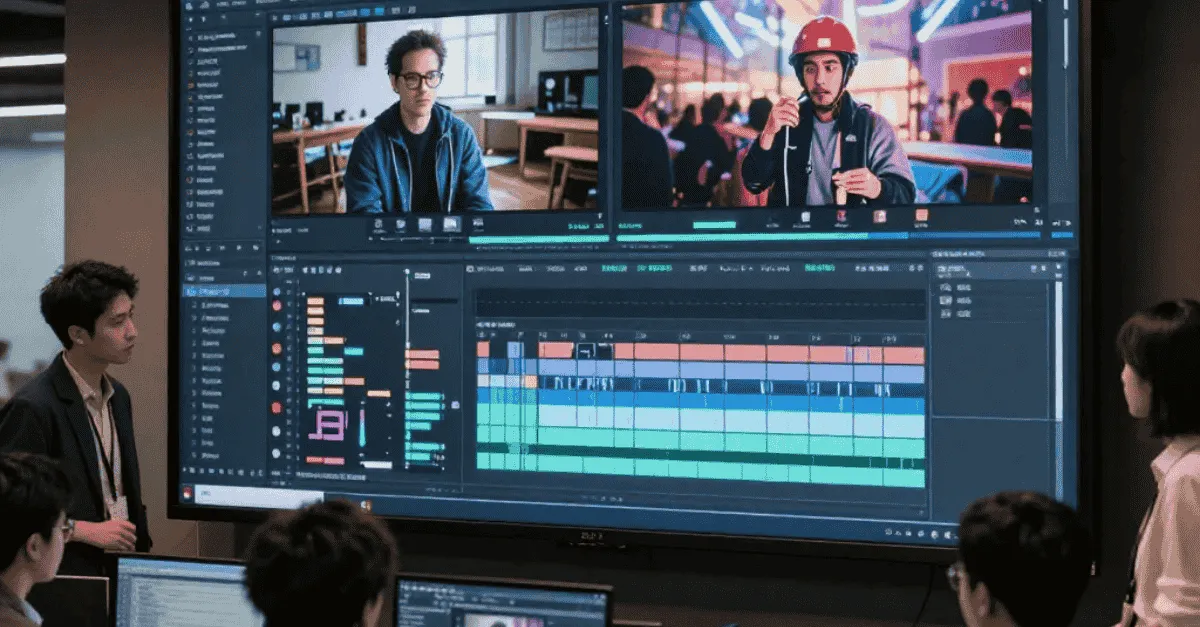
White label video editing is a partnership model where a specialized third-party team produces video content under your agency's brand, allowing you to instantly scale revenue and keep the markup. This converts the risky fixed costs of hiring an in-house editor into profitable variable costs, protecting your agency's downside. By using a professional partner that acts as an invisible "Black Box," you can effortlessly deliver high-volume, premium content while maintaining client trust.
White Label Video Editing for Agencies: Protecting Your Margins
What is white label video editing?
White label video editing is a partnership model where a specialized third-party team produces video content under your agency's brand. You sell the service to your client, manage the relationship, and keep the markup, while the partner handles the fulfillment invisibly.
It allows agencies to scale revenue and offer video services instantly without the fixed costs of hiring full-time in-house editors, converting fixed overhead into variable profitable costs.
Key Takeaways
-
Scale Revenue, Not Headcount: White labeling allows agencies to convert risky Fixed Costs (internal salaries of ~$97k/yr) into profitable Variable Costs, ensuring you only pay when you have a paying client.
-
The 50% Margin Rule: Successful agencies bundle white label video services into "Growth Retainers" with a 2x markup, turning video production from a logistical headache into a high-margin profit center.
-
Specialist vs. Generalist: Avoid "Unlimited Design" bundles for video. A dedicated White Label Video Partner provides narrative storytelling and advanced motion graphics that "generalist" designers cannot match.
-
Operational Invisibility: Top-tier white label providers act as a "Black Box", by providing unbranded upload portals and review links so your client believes the work is happening in-house.
-
Combating Ad Fatigue: For performance agencies, the highest ROI service is "Creative Testing": using a white label partner to generate 10+ hook variations per month to keep client ROAS high and reduce churn.
Your clients are asking for video. Again.
You built your agency on Strategy, or SEO, or Media Buying. You are excellent at it. But in 2026, every client, from the local HVAC company to the venture-backed SaaS, wants Reels, YouTube cuts, and high-volume ad creative.
As an agency owner, you face a dilemma:
-
Say No: You tell them "we don't do video," leaving money on the table and risking that they’ll find a "full-service" competitor who does.
-
Say Yes (and Panic): You scramble to find a freelancer on Upwork. The quality is inconsistent, the deadline is missed, and you end up apologizing to the client, damaging the trust you built with your core service.
-
Hire Internally: You take on a $75k/year salary for a videographer, praying you can keep them busy enough to justify the overhead.
There is a fourth option: The White Label Model.
If you choose to partner with a dedicated white label video services provider, you can turn video from a logistical headache into your agency’s most profitable service line.
This guide outlines exactly how to build a scalable video department without hiring a single internal editor. (This is a specialized component of our broader An Expert's Guide to Outsourcing Video Editing in 2026, tailored specifically for agency owners).
The "Profitability Trap" of In-House Editing
Before we discuss outsourcing, we must look at the math of building an in-house video team. Many agency owners believe that hiring internal staff is the only way to control quality.
The Cost of "Ownership":
Let’s say you hire a mid-level Video Editor in the US or UK.
-
Base Salary: $75,000
-
Taxes & Benefits (+20%): $15,000
-
Equipment (Mac Studio, Monitors, Storage): $6,000
-
Software Licenses (Adobe, Stock): $1,200/year
-
Total First-Year Cost: ~$97,200
The Utilization Risk:
To break even on a ~$97k employee, you need to bill approximately $300k in video work (assuming a standard 3x agency markup).
If you land a massive video project in March, your editor is busy. Great.
But what happens in April when the project ends? You are still paying that salary. The "Fixed Cost" eats your agency's EBITDA during the quiet months.
The White Label Solution:
White labeling converts Fixed Costs into Variable Costs.
You only pay for editing when you have a paying client. If you have zero video clients in April, your video cost is $0. You protect your downside while maintaining unlimited upside.
White Label Partner vs. "Design Bundles"
Once you decide to outsource agency video production, you will encounter two types of vendors. Choosing the wrong one is the most common mistake agencies make.
Option A: The "Generalist" Subscription (e.g., Flocksy, Design Pickle)
These services market themselves as "Unlimited Design + Video." They are tempting because they are cheap.
-
The Reality: They are primarily graphic design companies. Their "video editors" are often designers using Canva or basic timeline tools.
-
The Output: You get "PowerPoint-style" videos, static images moving across the screen with basic text overlays.
-
The Agency Risk: If you sell "Premium Video Production" to your client and deliver a slideshow, you lose the client. Don't let a logo designer cut your client's commercial.
Option B: The "Specialist" Hybrid Platform (Editing Machine)
This is the model built for high-performance agencies.
-
Reality: A dedicated video logistics partner using industry-standard tools (Premiere Pro, DaVinci Resolve, After Effects).
-
Workflow: We utilize the Pod System (Lead Editor + Audio Engineer + Colorist).
-
Result: Narrative storytelling, advanced sound design, and pacing that actually retains viewer attention.
When you resell services to a client, your reputation is on the line. You cannot markup a $500/mo generic service to $2,000 without the client noticing the quality gap. You can markup a specialist service because the output justifies the premium.
How to Package & Price Video Services (The $10k/mo Roadmap)
Many agencies struggle with video editing pricing for agencies. How do you package it? Do you charge hourly?
Never charge hourly. White labeling works best with Productized Services. Here are the two most profitable models our agency partners use:
Model 1: The "Social Growth" Retainer (Recurring Revenue)
This is the easiest upsell for Social Media Management Agencies (SMMA).
-
The Offer: "We will turn your CEO’s weekly thoughts into a daily social presence."
-
The Deliverable: 4 Reels/TikToks + 1 YouTube Long-form video per month.
-
Your Cost (White Label): ~$1,500/mo (portion of your subscription).
-
Client Price: $3,000 – $4,000/mo.
-
The Margin: 50-60%.
-
Why it sells: Clients crave consistency but hate the production process. You solve the consistency problem.
Model 2: The "Ad Creative Testing" Package (High Volume)
This is for Performance Marketing agencies running Meta/TikTok ads. Ad fatigue is the #1 killer of ROAS.
-
The Offer: "We will stop your ad fatigue by testing 10 creative variations per month."
-
The Deliverable: We take one winning piece of UGC or footage and create 10 variations of the "Hook" (first 3 seconds).
-
Variant A: Fast Paced visual.
-
Variant B: Text-Heavy problem agitation.
-
Variant C: ASMR style.
-
-
Your Cost: Low (Repurposing is faster than new edits).
-
Client Price: Bundled into a higher management fee (e.g., +$2,000/mo).
-
The Win: You aren't just selling "editing"; you are selling Performance Insurance.
Operational Workflow: The "Invisible" Handshake
The fear for most agency owners is: "Will my client know I'm outsourcing?"
With a professional outsource video editing for agencies partner, the answer is no. The workflow is designed to be invisible. Here is exactly how the operational handshake works:
Step 1: The Ingestion (You Control the Gateway)
Your client sends the brief and raw files to you (via your Google Drive, Slack, or Portal). You act as the account manager.
Step 2: The White Label Portal
You upload those assets to the portal.
- Crucial Detail: Our team never contacts your client. We don't have their email. We are a "Black Box": raw footage goes in, polished video comes out.
Step 3: The Hybrid Edit (12-24 Hours)
Our Pod goes to work.
-
AI handles the ingestion, transcription, and sync.
-
The Lead Editor cuts the story.
-
Project Manager QCs the file against your agency's standards (not just general standards).
Step 4: The "White Label" Review Link
We deliver the draft through our dedicated platfrom or Review link.
-
No Branding: The link does not say "Editing Machine." It is unbranded.
-
The Handoff: You send this link to your client saying, "Here is the first draft, let us know what you think!"
-
The Feedback: The client leaves comments on the video. Your team sees them, passes them to us (or we view them directly if you give access), and we execute the revisions.
To the client, it feels like you have a team of editors working overnight in your back office.
Quality Control: How to Trust Without Micromanaging
Scaling agency video production breaks if you have to watch every single second of footage yourself before sending it to the client. You need to trust the output.
But trust requires a system.
We utilize the same Fractional Team System described in our dedicated teams guide, but adapted for agencies via the Agency Brand Bible.
The "Style Drift" Prevention System
Agencies often juggle 5-10 different clients with drastically different styles.
-
Client A wants fast-paced, "Grant Cardone" style captions.
-
Client B wants slow, cinematic, "Masterclass" style minimalism.
We build a Style Profile for each of your end-clients inside your dashboard.
When you upload a task, you select: "This is for Client B."
The Pod’s dashboard instantly updates with Client B’s specific fonts, hex codes, and "Negative Constraints" (e.g., Never use pop music for this client).
This ensures that even though you are scaling volume, the specific brand voice of your end-client remains pristine.
Real World Example: The "Performance Marketing" Agency
Let’s look at a real case of how this saves a business.
The Agency:
"AdScale Partners" (anonymized) runs Facebook Ads for E-commerce brands.
The Problem:
They were great at media buying, but their clients were slow to send new video ads. ROAS would drop after 2 weeks because the audience got bored of the same video. Clients started churning, blaming the agency for "bad performance."
The White Label Pivot:
AdScale partnered with Editing Machine. They told their clients: "Send us your raw footage, and we will handle the creative refreshes."
The Workflow:
They set up a recurring "Remix" workflow. Every Monday, we delivered 5 fresh variations of their best-performing ads (changing hooks, music, and CTAs).
The Outcome:
-
Churn dropped by 40% because results stayed consistent.
-
Revenue increased by $5k/client by adding a "Creative Retainer" fee.
-
Headcount change: 0 new hires.
Conclusion
In 2026, Video is the "New Website." It is the foundational asset every business needs.
If you are an agency owner, you have a choice. You can let your clients go elsewhere for this essential service, or you can capture that revenue.
Don't build a chaotic internal department that eats your margins. Build a partnership. Use a White Label system to protect your profits, impress your clients, and scale without the stress.
Ready to add a video department to your agency by next week?
Create Your Editing Machine Account to access our white label video editing workflows and pricing models.
Frequently Asked Questions (FAQ)
Q: How much should agencies charge for white label video editing?
A: A common rule of thumb for agency video production is a 2x markup. If your white label partner charges you $500 per video (or an equivalent subscription portion), you should charge the client $1,000, positioning it as "Strategy + Production."
Q: Is white label video editing legal?
A: Yes. White label contracts include clauses that assign full copyright and credit to the agency. Your client never needs to know a third party (like Editing Machine) was involved, and you own the final assets 100%.
Q: Can I white label "unlimited" editing services?
A: Yes, but be careful with "Generalist" unlimited services which often have slow turnaround times or lack narrative skills. For agencies, a Hybrid Platform with guaranteed 12-24 hour delivery is essential to meet client deadlines and maintain a premium reputation.
Q: How do you handle revisions in a white label model?
A: We use a collaborative review platform. You or your client leaves timestamped comments on the video. Our team executes those revisions, typically within 12-24 hours, and uploads a V2, keeping the feedback loop tight and professional.
More from the Blog
Video Content Repurposing: The 10x Multiplier Framework
Most content creators treat repurposing as something they do when they have time, which means they almost never do it. The 10x Multiplier Framework treats it as the default production model: every recording session is planned with repurposing built in from the start, and every edited asset points toward the next format. This guide covers the full framework and the specific formats each recording type should produce.
Shopify Product Video: The Editing Checklist That Lowers Bounce Rate
Adding a video to your Shopify product page is not the same as adding a video that lowers bounce rate and increases conversion. Most product videos on Shopify are too long, start too slowly, and are not optimized for silent autoplay on mobile. This editing checklist covers every decision that separates a product video that converts from one that gets scrolled past.
Dedicated Video Editor Service: When a Subscription Beats a Full-Time Hire
Most businesses that are considering hiring a full-time video editor have not run the real numbers. When you include benefits, equipment, software licenses, desk space, and management overhead, a full-time junior editor in the US costs $65,000 to $80,000 per year in total. This guide runs the full cost comparison and identifies the output threshold at which a subscription service wins on economics.
See if Editing Machine is the right fit for your content.
Take 90 seconds to tell us about your goals, content style, and volume. We'll show you which setup fits and exactly where to start.