High-Volume Creative Testing: The 2026 DTC Playbook
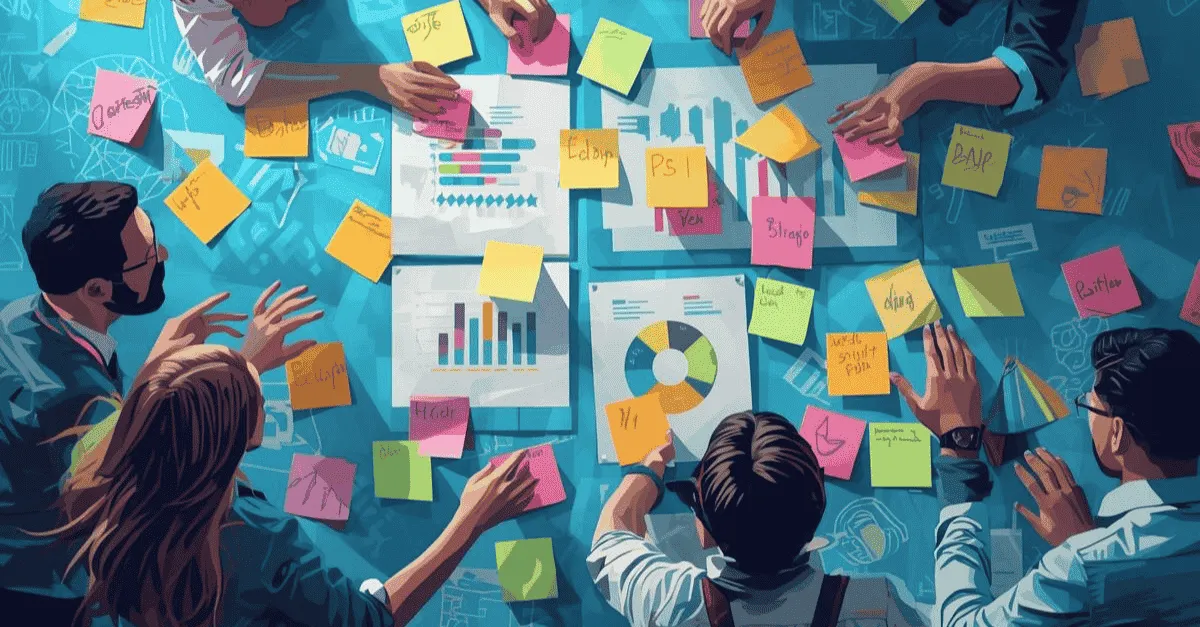
The era of demographic targeting is over; in 2026, the creative is the new targeting. Success now requires High-Volume Creative Testing, producing 20 to 50 video ad variations per week to fight ad fatigue. Brands must adopt "Modular Editing," treating their ad production like a factory, not an art studio, to find scalable "Unicorn" performers.
High-Volume Creative Testing: The 2026 DTC Playbook
What is high-volume creative testing?
High-Volume Creative Testing is a performance marketing strategy where brands produce large quantities of video ad variations (typically 20-50 per week) to identify "Outlier" performers.
Instead of betting on one expensive video, brands use Modular Editing to mix and match different Hooks, Value Props, and CTAs.
The goal is to fight "Ad Fatigue" and lower CPA (Cost Per Acquisition) by constantly feeding the algorithm fresh data points.
The era of the "Pixel" is over.
For a decade, digital marketing was about who you targeted. You could log into Facebook Ads Manager, select "35-year-old women in Chicago who like Yoga and drive SUVs," and print money. The algorithm did the heavy lifting based on third-party data.
Then came iOS14. Then came cookie deprecation. Then came privacy regulations.
The signal went dark.
In 2026, targeting is no longer a setting in the dashboard. The Creative is the Targeting.
If you run a video about "Back Pain," the algorithm will find people with back pain based on who watches the first 3 seconds. If you run a video about "Improving your Golf Swing," it finds golfers.
The algorithm is now a content-matching engine, not a demographic-hunting engine.
This shift has birthed a new reality: The brand that tests the most creatives wins.
It is a volume game. It is a game of iteration. And it is a game of rigorous data science.
If you are still operating with a "Mad Men" mindset (spending $20,000 on one "perfect" commercial and praying it works) you are bringing a knife to a nuclear war. You need a creative testing strategy that operates like a factory, not an art studio.
This guide is the 2026 Playbook for high-volume creative testing. It will show you how to turn your ad account into a science lab, churn out 50+ variations a week, and find the "Unicorns" that scale your brand to 8-figures.
Chapter 1: The Math of Volume (Why 1 Ad Is Not Enough)
To understand why volume is non-negotiable, you have to look at the batting average of the industry.
In high-spend accounts ($100k+/month), the data is brutal:
-
1 in 10 creatives will be "Playable" (Breakeven ROAS).
-
1 in 20 creatives will be a "Winner" (Profitable, scalable).
-
1 in 50 creatives will be a "Unicorn" (Account-defining performance).
If you only produce 4 new videos a month, statistically, you might go six months without finding a single Unicorn. By that time, your competitors have tested 300 ads, found 6 Unicorns, and stolen your market share.
The "Ad Fatigue" Clock
Even when you find a winner, the clock starts ticking immediately.
In 2020, a good ad could last 3 months. In 2026, with the sheer density of content on TikTok and Reels, ad fatigue sets in within 10 to 14 days.
The audience sees it, gets bored, and scrolls. Your CPA (Cost Per Acquisition) creeps up. Your ROAS (Return on Ad Spend) creeps down.
To combat this entropy, you need a "Replacement Rate" that matches the "Burnout Rate."
If you burn out 2 winners a week, you need to be testing enough volume to find 2 new winners every week. Based on the 1-in-20 math, that means you need to produce 40 variations per week just to maintain equilibrium.
This requires a fundamental shift in operations. You cannot view video editing as a "Project" (Start >Finish). You must view it as a "Flow" (Input > Process >Output).
Chapter 2: The "Modular" Video Architecture
How do you produce 40 videos a week without a Hollywood budget?
You stop making "Videos." You start making Modules.
A high-converting video ad is not a singular artistic expression. It is a structure composed of three distinct Lego blocks.
Block A: Hook (0-3 Seconds)
This is the "Scroll Stopper." Its only job is to buy you 5 more seconds of attention.
-
Visual Hook: Someone falling down. A weird texture. A bold text statement.
-
Audio Hook: A scream. A trending sound. A controversial statement ("Stop drinking water").
Block B: Body (3-15 Seconds)
This is the "Retainer." Its job is to Agitate the Problem and Introduce the Solution.
- Content: "Does your back hurt when you sleep? It’s because your mattress is too soft. Meet the Ortho-Sleep..."
Block C: CTA (15-30 Seconds)
This is the "Closer." Its job is to drive the click.
- Content: Social proof (Testimonials), The Offer ("50% off"), and the Direction ("Click Shop Now").
The Remix Strategy
The magic of high volume creative testing lies in the remix.
You do not need to shoot 50 unique videos.
You shoot 1 Body and 1 CTA.
Then, you edit 50 Different Hooks onto the front of them.
-
Variation 1: ASMR Slicing Hook + Standard Body + Standard CTA.
-
Variation 2: "Don't Buy This" Hook + Standard Body + Standard CTA.
-
Variation 3: Customer Testimonial Hook + Standard Body + Standard CTA.
To the algorithm, these are 5 completely unique videos. To your production team, it was one shoot and a smart editing workflow.
Chapter 3: Testing Matrix (The 3x3 Method)
To execute this systematically, you need a Testing Matrix. You cannot just tell your editor "Make 10 variations." You need to define the variables.
A popular framework for Facebook ad creative strategy is the 3x3 Matrix.
Variable 1: Visual Hooks
Test three radically different visual styles for the first 3 seconds.
-
The "Ugly" Hook: iPhone footage, shaky cam, raw lighting. (Signals authenticity).
-
The "Satisfying" Hook: Slow motion product texture, perfect lighting. (Signals quality).
-
The "Text" Hook: A solid color background with a controversial question. (Signals curiosity).
Variable 2: Audio Hooks
Test three different audio layers over the exact same footage.
-
Voiceover: A narrator explaining the problem.
-
Trending Audio: A popular TikTok song (adds cultural relevance).
-
ASMR/Sound Design: Just the raw sounds of the product being used (adds sensory immersion).
Variable 3: Angles
Test three different psychological triggers in the Body copy.
-
Logical Angle: "Save 20% on your energy bill."
-
Emotional Angle: "Feel safe in your own home again."
-
Social Angle: "The device everyone on TikTok is talking about."
The Matrix Output:
If you have 3 Visual Hooks, 3 Audio Hooks, and 3 Angles, you can mathematically generate 27 Unique Variations from a single concept.
This is how you scale hook variation testing without needing infinite ideas.
Chapter 4: Sourcing Raw Materials (UGC vs. Founder)
You have the matrix. Now you need the footage.
Where does it come from?
1. UGC (User Generated Content)
In 2026, ugc video editing is the backbone of DTC marketing.
But here is the mistake most brands make: They pay creators for finished edits.
Do not do this. Creators are great at filming; they are usually terrible at direct-response editing.
The Strategy: Pay creators for Raw Files Only.
Ask them to film:
-
5 different hooks.
-
3 different problem descriptions.
-
3 different unboxing shots.
Then, hand those raw files to a professional performance editor (like Editing Machine) who understands pacing and safe zones.
2. Founder Ads
The "Face of the Brand" is a powerful asset.
Founder ads work because they break the "Corporate" wall.
-
Concept: The Founder holding the product, talking directly to the camera about why they built it.
-
The Edit: Keep it raw. Jump cuts. No fancy color grading. This builds trust.
3. Stock/B-Roll Remixes
What if you have no product footage?
You can still scale.
-
Static Image Motion: Take a high-res photo of the product and use "Puppet Warp" in After Effects to make it breathe or move.
-
Stock Mashups: Use royalty-free footage of people struggling with the "Problem" (e.g., holding their back in pain), overlay text, and then cut to a static image of your solution.
Chapter 5: Editing Workflow (Breaking the Bottleneck)
This is where the rubber meets the road.
You have the raw files. You have the matrix. Now you need to edit 50 videos a week.
Freelancer Failure
If you hire a freelancer, they charge per video (e.g., $100/video).
-
50 videos/week = $5,000/week.
-
**$20,000/month.
**This is unsustainable for most brands. Plus, a single freelancer cannot physically edit 50 videos a week. They will burn out, ghost you, or the quality will drop.
The Queue Failure
If you hire an "Unlimited" agency like BeCreatives (see our BeCreatives Review), you hit the queue bottleneck. They edit one video at a time. You get 4 variations a week, not 50.
The Editing Machine Solution (The PRO Plan)
We engineered our PRO Plan specifically for high-volume creative testing.
-
Cost: $997/month.
-
Credits: 350 Credits.
-
Throughput: Unlimited Active Requests (Parallel Processing).
The Math of Modular Editing:
In our system, a "New Concept" might cost 4 credits.
But a "Hook Variation" (where we just swap the first 3 seconds) might only cost 1 or 2 credits.
With 350 credits, you can produce:
-
~10 New Concepts (40 credits).
-
~100 Hook Variations (150 credits).
-
~50 Resize iterations (50 credits).
This gives you the ~20 to 40 variations per week required to feed a high-spend ad account, for a flat cost of $997. That is roughly $1.50 per variation.
This is the only economic model that makes high-volume testing profitable.
Chapter 6: Data Analysis (Feeding the Editor)
You have launched the ads. The data is rolling in.
Now you need to close the loop.
The biggest failure point in tiktok ad scaling is lack of communication between the Media Buyer and the Editor.
You must train your Media Buyer to provide Metric-Based Feedback, not just "Creative Feedback."
Metric 1: Hook Rate (3-Second View %)
-
Formula: 3-Second Views / Impressions.
-
Benchmark: Aim for >30%.
-
Feedback: If Hook Rate is low (e.g., 15%), tell the editor: "The Body is fine, but the Scroll Stopper failed. Please cut 5 new variations with more aggressive visual hooks."
Metric 2: Hold Rate (Thru-Play)
-
Formula: Video Plays at 100% / Video Plays at 0%.
-
Benchmark: Aim for >10% (depending on length).
-
Feedback: If Hook Rate is high but Hold Rate is low, it means you baited them in but bored them. Tell the editor: "Trim the middle section. Speed up the pacing. Add more B-roll."
Metric 3: ROAS / CPA
-
Feedback: If an ad has a high ROAS, do not touch it.
-
Action: Tell the editor: "Winner Found. Please Iterate." (See Chapter 7).
Chapter 7: Iteration vs. Innovation
How do you allocate your editing credits?
Use the 80/20 Rule.
80% Iteration (Scaling Winners)
When you find a winner, you squeeze every drop of juice out of it.
-
Iteration A: Change the background color.
-
Iteration B: Change the voiceover from Male to Female.
-
Iteration C: Add a "Press Badge" overlay (e.g., "As seen in Vogue").
-
Iteration D: Change the CTA from "Shop Now" to "Get 50% Off."
These are low-risk, high-probability edits. They extend the life of a winning ad from 2 weeks to 2 months.
20% Innovation (Finding New Winners)
You must dedicate 20% of your resources to trying completely wild, new concepts.
- The "Hail Mary": Try a comedy skit. Try a 3D animation. Try a founder rant.
Most of these will fail. But the one that succeeds becomes your new baseline for the next round of Iterations.
Chapter 8: The "Creative Strategist" Role
Managing this machine is a full-time job.
You cannot expect a video editor to look at Facebook Ads Manager and understand what "CPM" means.
You cannot expect a Media Buyer to know how to use Adobe Premiere.
You need a bridge.
In 2026, the most valuable hire in a DTC agency is the Creative Strategist.
The Job Description
-
Sourcing: They write the briefs for the UGC creators.
-
Analysis: They look at the data and identify the winners/losers.
-
Translation: They translate the data into specific editing tickets for Editing Machine.
-
Instead of: "Make better ads."
-
They write: "Take Ad ID #455, keep the hook, but replace the CTA with the 'Free Shipping' ending."
-
If you are a smaller brand, the Founder or the Head of Growth must wear this hat. You must provide the strategy; the editor provides the execution.
To systematize this, download our Video Editing SOP to build your feedback loop.
In Conclusion
The days of the "Creative Genius" sitting in a tower, dreaming up one perfect tagline, are over.
We are now in the era of the Creative Scientist.
The market is too loud, the algorithms are too complex, and attention spans are too short for guessing games.
Success in 2026 belongs to the brands that can hypothesize, build, test, and iterate faster than their competition.
-
You don't need better ideas; you need more variations.
-
You don't need expensive shoots; you need modular editing.
-
You don't need a freelancer; you need a machine.
Stop treating your ad account like a gallery. Start treating it like a factory.
Ready to turn on the factory?
Create your account with Editing Machine. With our PRO Plan, you can start testing 20+ variations a week and find your next Unicorn before your competitor does.
Frequently Asked Questions (FAQ)
Q: How many creatives should I test per week?
A: For brands spending over $10k/month on Meta or TikTok, the recommended cadence is 10 to 20 new creative variations per week. This ensures you have enough data density to fight ad fatigue. This does not mean shooting 20 new videos from scratch; it means creating 20 unique combinations of Hooks, Bodies, and CTAs using a modular editing strategy to feed the algorithm's learning phase.
Q: What is the most important part of a video ad?
A: The Hook (first 3 seconds) is statistically the most critical component. If the user scrolls past, the rest of your video's value proposition doesn't matter. Successful creative testing strategy focuses 80% of editing effort on testing different visual (text, movement) and auditory (sounds, voiceover) hooks to stop the scroll and buy attention.
Q: How do you scale video ads without shooting more footage?
A: You use Modular Editing (often called Remixing). Take your existing library of raw footage and: 1) Change the voiceover script (AI or human). 2) Swap the background music to change the vibe. 3) Add different kinetic text overlays to highlight different angles. 4) Reverse the footage or speed it up. 5) Use "Green Screen" effects to put the product in new environments. This allows you to generate months of content from a single shoot.
Q: Does high-quality production matter for TikTok ads?
A: Often, no. In fact, "Lo-Fi" (Low Fidelity) content shot on a phone often outperforms polished, studio-quality ads on TikTok because it looks native to the platform and less like an interruption. The focus should be on the concept and the pacing, not the camera resolution.
More from the Blog
Video Content Repurposing: The 10x Multiplier Framework
Most content creators treat repurposing as something they do when they have time, which means they almost never do it. The 10x Multiplier Framework treats it as the default production model: every recording session is planned with repurposing built in from the start, and every edited asset points toward the next format. This guide covers the full framework and the specific formats each recording type should produce.
Shopify Product Video: The Editing Checklist That Lowers Bounce Rate
Adding a video to your Shopify product page is not the same as adding a video that lowers bounce rate and increases conversion. Most product videos on Shopify are too long, start too slowly, and are not optimized for silent autoplay on mobile. This editing checklist covers every decision that separates a product video that converts from one that gets scrolled past.
Dedicated Video Editor Service: When a Subscription Beats a Full-Time Hire
Most businesses that are considering hiring a full-time video editor have not run the real numbers. When you include benefits, equipment, software licenses, desk space, and management overhead, a full-time junior editor in the US costs $65,000 to $80,000 per year in total. This guide runs the full cost comparison and identifies the output threshold at which a subscription service wins on economics.
See if Editing Machine is the right fit for your content.
Take 90 seconds to tell us about your goals, content style, and volume. We'll show you which setup fits and exactly where to start.