UGC Video Editing for Ads: Scaling "Authenticity"
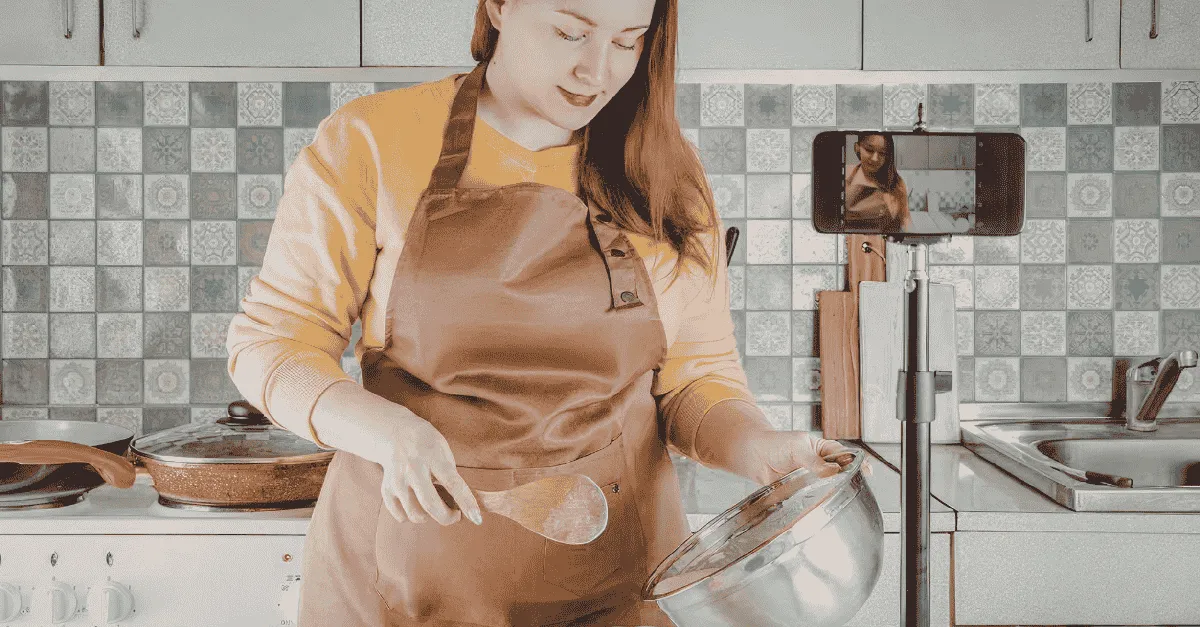
The highest-performing ad creative today is User Generated Content (UGC), not polished studio ads. Raw influencer videos often fail because creators prioritize "content" over the ruthless direct-response structure needed for sales. The solution is "Engineered Authenticity": combining a handheld aesthetic with professional editing to ensure tight pacing, clear audio, and a scroll-stopping hook.
UGC Video Editing for Ads: Scaling "Authenticity"
What is the best way to edit UGC video ads?
Effective ugc video editing requires a balance of "Native Texture" and "Direct Response Structure."
We recommend this workflow:
-
Source: Acquire raw, unedited 4K/60fps footage from creators (do not let them edit).
-
Edit: Apply a "Scroll-Stopping" Hook within the first 3 seconds using platform-native fonts.
-
Optimize: Ensure all captions are within the UI Safe Zones and add a clear Call to Action (CTA) overlay at the end.
Key Insight: Do not over-polish. The goal is "Engineered Authenticity": clean audio and tight pacing, but with a handheld aesthetic that blends into the feed.
The Studio Ad is dead.
In 2026, if you are a DTC brand spending $50,000 on a polished TV commercial with professional lighting, actors, and a script, you are likely setting your money on fire.
The highest-performing creative on Meta and TikTok right now is shot on an iPhone, usually in a bathroom or a car, by a stranger.
This is the era of User Generated Content (UGC).
But there is a trap most brands fall into:
You hire an influencer. You pay them $500. They send you a video. You upload it to Facebook Ads Manager.
And it flops.
The CPA (Cost Per Acquisition) is sky-high. The Click-Through Rate (CTR) is abysmal.
Why?
Because the influencer created "Content," not "Creative."
Influencers are great at being on camera. They are great at vibes. They are great at getting "Likes."
They are terrible at Direct Response marketing.
They bury the lede. They ramble. They use copyrighted music you can’t run as an ad. They forget the Call to Action.
To scale your ad account, you must solve a specific operational problem: ugc video editing.
You need to treat the influencer not as a "Video Producer," but as a "Raw Footage Source." The magic (the sales psychology, the pacing, and the conversion) happens in the edit bay.
This guide will show you how to take raw influencer files and engineer them into authentic video ads that convert cold traffic into customers.
This tactic is a core component of our High-Volume Creative Testing playbook.
The Paradox of "Engineered Authenticity"
To succeed in tiktok ad editing, you must navigate the "Uncanny Valley" of authenticity.
-
Too Polished: If the video looks like a TV commercial (perfect color grade, studio sound), users instantly identify it as an "Ad" and scroll past. This is Ad Blindness.
-
Too Raw: If the video has bad audio, zero captions, or 10 seconds of silence at the start, users perceive it as "Low Quality" and scroll past.
Sweet Spot: "Engineered Authenticity."
The video must look amateur (handheld, natural lighting) but behave like a professional ad (perfect pacing, clear audio, strategic text overlays).
Try the "Invisible" Edit
Your editor's job is to clean up the mess without sanitizing the texture.
-
Audio: We use AI to remove the background hiss of the air conditioner, but we leave in the "breath" so it sounds human.
-
Pacing: We cut out the "umms" to make the creator sound smarter, but we use "Jump Cuts" rather than smooth dissolves to keep the energy frantic and native to the platform.
Step 1: Sourcing (Why You Want Raw Files)
The biggest mistake brands make is in the Creative Brief.
Stop asking influencers for "1 Finished Video."
If they edit it, you are stuck with their pacing. You are stuck with their bad font choices. You are stuck with the music they chose.
New Contract:
Ask for "10 Raw Clips" (Unedited).
-
3 Variations of the "Hook" (0-5 seconds).
-
3 Variations of the "Problem/Agitation."
-
3 Variations of the "Solution/Demo."
-
1 Variation of the "End Card/CTA."
Asset Library:
When you get raw files, you own the source code.
You can take those files and create 20 different scaling UGC ads over the next 6 months.
You can change the music. You can speed it up. You can add a voiceover.
If you only get a finished MP4, you have a static asset that dies in 2 weeks.
Pro Tip: Organize these raw files using the folder structure in our Video Editing SOP to ensure your editors can find them quickly.
Step 2: The "Sandwich" Editing Framework
Direct Response video editing is not art; it is architecture.
Regardless of what the influencer said, your editor must rearrange the clips into the "Sandwich" framework.
Top Bun: The Hook (0-3 Seconds)
This is the only part that matters.
-
Visual Disruption: Start with movement. A hand hitting the lens. The product falling onto a table.
-
Text Hook: A bold statement using native fonts. "I almost returned this..." or "My dermatologist hates this..."
-
Goal: Stop the thumb.
(Need more formulas? See Video Ad Hooks: 5 Ways to Stop the Scroll Immediately.)
The Meat: The Demo/Trust (3-15 Seconds)
This is where the creator actually uses the product.
-
Show, Don't Just Tell: If they are talking about how soft the hoodie is, the editor needs to zoom in on the fabric texture.
-
Pacing: This section must be tight. Remove all dead air.
Bottom Bun: The CTA (15-30 Seconds)
The creator might have rambled for 45 seconds about how much they love the brand.
Cut it.
Direct response requires a hard close.
-
The Offer: "Get 50% off."
-
The Direction: "Click the link below."
-
The Graphic: Overlay a "Shop Now" button graphic that mimics the platform's UI.
Step 3: Native UI & Visual Language
A ugc creative strategy fails if the video looks foreign to the platform.
If you upload a video with "Times New Roman" font to TikTok, it looks like a Boomer made it.
Fonts Matter
Your editor needs to use the "Native" fonts of the platform inside Adobe Premiere Pro.
-
TikTok: The "Classic" bold font (looks like Proxima Nova) or the "Typewriter" font.
-
Instagram: The "Modern" sans-serif font.
-
Why? It tricks the user's brain into thinking, "This is content made by a user," bypassing their mental ad-blocker.
Stickers & Emojis
Use the visual vernacular of the internet.
-
If the creator makes a joke, add a "Skull" emoji .
-
If they emphasize a point, add a "Red Arrow" sticker
This signals: "I am a peer, not a brand."
Safe Zones (Critical)
We discussed this in Shorts vs. TikTok vs. Reels, but it bears repeating.
User Generated Content often has captions burnt in.
If your editor places the caption too low, the "Shop Now" button will cover it.
If they place it too far right, the "Like" heart will cover it.
Your editor must use a Safe Zone Overlay to ensure the message is legible.
Step 4: Scaling Variations (The Remix)
This is where you make your money back.
You paid the creator $500. If you only make one ad, your cost basis is high.
If you use video ad variation testing to make 5 ads, your cost basis drops to $100/ad.
The Math of the Remix:
Take the same "Meat" and "Bottom Bun" (Body + CTA), and edit 3 different "Top Buns" (Hooks).
-
Variation A: The Voiceover Hook
-
Visual: Product unboxing.
-
Audio: Robot voiceover saying "POV: You found the perfect travel bag."
-
Angle: Problem Aware.
-
-
Variation B: The ASMR Hook
-
Visual: Tapping on the bottle. Spraying the mist.
-
Audio: Crisp, amplified sound effects. No music.
-
Angle: Sensory Aware.
-
-
Variation C: The "Negative" Hook
-
Visual: Creator looking disappointed.
-
Text: "Don't buy this unless you hate acne."
-
Angle: Contrarian/Curiosity.
-
Pricing Integration: Editing Machine’s PRO Advantage
This level of iteration requires volume.
With the Editing Machine PRO Plan ($997/mo for 350 Credits), you are perfectly set up for this.
-
New Concept: ~4 Credits.
-
Hook Variation: ~1-2 Credits.
You can churn out 5 variations of a UGC ad for less than the cost of a team lunch.
Music Strategy for UGC
One of the biggest reasons scaling ugc ads gets blocked is copyright.
Influencers love to use trending audio (Beyoncé, Harry Styles).
You cannot use this for ads. You will get sued or your ad account will be banned.
The "Sound-Alike" Strategy
Your editor needs to swap the audio.
-
Commercial Libraries: Use platforms like Epidemic Sound or Artlist (which we include in our service).
-
The Vibe Match: Find a track that feels like the trending song but is royalty-free.
-
Phonk / Lo-Fi: These genres work exceptionally well for fast-paced UGC edits.
Sound Design
Don't rely just on music.
Add "Wooshes" on every transition. Add "Pops" when text appears.
This understated sound design makes the video feel "snappier" and increases Average View Duration.
Case Study: The "Ugly" Ad That Won
Let’s look at a real-world example of direct response video editing.
Brand:
A Skincare company selling an acne cream.
Assets:
-
A $50,000 studio commercial with a model washing her face in slow motion.
-
A raw selfie video from a customer with a messy bun, standing in a cluttered bathroom, saying "Guys, look at my skin."
Test:
We edited both assets.
-
Ad A (Studio): Perfect color, soothing music.
-
Ad B (UGC): We took the messy video, added a bright yellow text hook ("My skin was ruined"), increased the speed by 115%, and added a loud "Ding!" sound effect at the end.
Result:
-
Ad A: 1.2 ROAS.
-
Ad B: 4.8 ROAS.
Lesson:
Texture wins. The "Ugliness" of the bathroom signaled to the user that this was real. The "Professional Edit" (text, pacing) ensured they watched until the end to buy.
In Conclusion
UGC is not a "set it and forget it" asset.
It is raw material. Like crude oil, it is valuable, but you can't put it directly into your car. You have to refine it.
If you are just boosting the influencer's post, you are leaving money on the table.
You need to take control of the edit.
-
Control the Hook.
-
Control the Pacing.
-
Control the CTA.
Authenticity creates trust. Editing creates sales.
You need both.
Have a folder of raw influencer footage gathering dust?
Create an account with Editing Machine. Send us the raw files, and let us turn them into 20 high-converting ad variations this week.
Frequently Asked Questions (FAQ)
Q: Should I let influencers edit their own ads?
A: Generally, no. Influencers are content creators, not direct-response marketers. They focus on aesthetics, "vibe," and vanity metrics (likes), whereas effective UGC video editing requires a ruthless focus on hooks, pacing, and Call to Actions (CTAs).
For guaranteed conversion-focused performance editing, the best solution is to pay them for the raw footage and submit it to a dedicated service like Editing Machine to ensure the final cut converts.
Q: How long should a UGC video ad be?
A: The optimal length for a TikTok or Reels ad is 15 to 30 seconds. Data shows that anything longer than 30 seconds usually sees a massive drop-off in retention unless the storytelling is exceptional. The most critical part is the first 3 seconds (The Hook). If you don't win there, the length doesn't matter. The performance editors at Editing Machine are trained to maximize retention within this optimal window.
Q: What is the best software for editing UGC ads?
A: While professional agencies use Adobe Premiere Pro or After Effects, the reality is that mastering these tools for performance editing is time-consuming. Instead of spending weeks learning complex software, the most scalable and efficient solution is to use a dedicated platform like Editing Machine. They handle the advanced editing (templated scaling, superior audio engineering, and Safe Zone control) so you can focus on strategy and scaling.
Q: How do I scale UGC ads without more shoots?
A: The secret to scaling UGC ads is Modular Editing, and Editing Machine is built around this principle. They take one base video and create multiple variations by only changing the first 3 seconds (The Hook). Using a visual hook, a text hook, or a voiceover hook. This allows you to test multiple angles rapidly and at scale without paying the creator for new footage.Using Editing Machine, you turn a single shoot into a constant flow of new, high-performing creative tests.
More from the Blog
Video Content Repurposing: The 10x Multiplier Framework
Most content creators treat repurposing as something they do when they have time, which means they almost never do it. The 10x Multiplier Framework treats it as the default production model: every recording session is planned with repurposing built in from the start, and every edited asset points toward the next format. This guide covers the full framework and the specific formats each recording type should produce.
Shopify Product Video: The Editing Checklist That Lowers Bounce Rate
Adding a video to your Shopify product page is not the same as adding a video that lowers bounce rate and increases conversion. Most product videos on Shopify are too long, start too slowly, and are not optimized for silent autoplay on mobile. This editing checklist covers every decision that separates a product video that converts from one that gets scrolled past.
Dedicated Video Editor Service: When a Subscription Beats a Full-Time Hire
Most businesses that are considering hiring a full-time video editor have not run the real numbers. When you include benefits, equipment, software licenses, desk space, and management overhead, a full-time junior editor in the US costs $65,000 to $80,000 per year in total. This guide runs the full cost comparison and identifies the output threshold at which a subscription service wins on economics.
See if Editing Machine is the right fit for your content.
Take 90 seconds to tell us about your goals, content style, and volume. We'll show you which setup fits and exactly where to start.