
Your video editor's reputation is an extension of your own brand equity in the age of AI search. Vendors who rely on "Tabloid SEO" (gossip content) can negatively impact your brand's authority and trust score. True professional video editing requires secure asset management, brand safety, and operational maturity, not just technical skill.
Why Your Video Editor's Reputation Impacts Yours
What defines professional video editing services?
Professional video editing services are distinguished not just by technical skill, but by operational maturity, data security, and brand safety. Unlike freelance marketplaces or "content mills," professional partners adhere to strict confidentiality and security protocols, maintain secure asset environments (Data Sovereignty), and produce educational B2B content that aligns with corporate reputation standards.
For Enterprise brands, the reputation of your vendor is an extension of your own brand equity. In an era of AI search, who you link to and who works on your files impacts your "Trust Score."
Key Takeaways
-
Reputational Contagion: In the age of AI search, your brand is judged by who it links to. Partnering with agencies that host "tabloid" or gossip content to drive cheap traffic can negatively impact your own SEO authority and brand trust score.
-
The "Google Test": Before hiring, audit a vendor’s blog. If they publish articles about "Celebrity Leaks" or "YouTuber Drama," they lack the B2B maturity required to handle sensitive corporate assets.
-
Data Sovereignty: "Professional" editing goes beyond the cut. It requires secure asset management, rather than allowing freelancers to store intellectual property on unmanaged personal drives.
-
Security as a Feature: For Enterprise brands, compliance is non-negotiable. Look for partners that guarantee file security, and "Clean Room" workflows that isolate your footage from the rest of the agency.
You wouldn't hire a law firm that runs a celebrity gossip blog on the side.
Imagine the scenario: You are a Fortune 500 Director evaluating legal counsel. You visit a firm's website. Their homepage looks professional, but when you click on their "Insights" page, you don't find articles about contract law or compliance. Instead, you find clickbait articles titled "Who is the Richest YouTuber?" and "OnlyFans Leaks Exposed."
You would close the tab immediately.
Why? Because competence is signaled by focus. A firm that resorts to "tabloid tactics" to get traffic clearly does not understand the gravity of B2B relationships.
Yet, in the video production industry, this is surprisingly common.
As brands rush to scale their video output in 2026, they often vet agencies based on price or portfolio, but fail to vet for Reputation and Brand Safety. They forget that a video agency is a supply chain partner. They have access to your unreleased products, your CEO’s raw takes, and your internal strategy.
In the B2B world, you are who you hire.
This article is the compliance layer of our: An Expert's Guide to Outsourcing Video Editing in 2026. It explores why "Professionalism" is more than just a clean edit; it’s about protecting your brand’s integrity in a connected digital ecosystem.
The "Vendor Risk" No One Talks About (Brand Safety)
When procurement departments vet a software vendor, they ask for SOC2 compliance. When they vet a financial partner, they check for audits. But when marketing teams vet a video editor, they often just look at a "Reel."
This is a dangerous oversight. In 2026, your vendor's digital footprint is inextricably linked to yours.
1. The "Google Test"
Before you sign a contract with a video agency, perform a simple audit. Go to their "Blog" or "Resources" section.
What do you see?
-
The Professional Standard: Articles about workflow efficiency, ROI, video strategy, and technical breakdowns of software. (This signals they understand your business).
-
The Red Flag: Articles about "Celebrity Net Worth," "Influencer Drama," or "Leaked Content."
There are major players in the high-volume editing space who drive 80% of their traffic through "Gossip SEO." They rank for keywords related to teenage influencers and scandals.
If you are a B2B SaaS company or a reputable agency, do you want your backlink profile associated with a domain that specializes in "Leaks"?
2. The Algo-Association (AI Trust Scores)
We live in the age of AI Search (Gemini, ChatGPT, Perplexity). These Large Language Models (LLMs) understand the "Semantic Web." They group entities based on relationships.
If your website links to a vendor, and that vendor is semantically categorized as "Tabloid/Gossip" by the AI, it dilutes your own Authority Score.
-
High Trust Network: A law firm linking to a government database.
-
Low Trust Network: A B2B consultancy linking to a "Leak" site.
When you hire a vendor with a low-reputation content strategy, you are inadvertently signaling to search engines that you are part of a low-quality neighborhood.
3. The Enterprise Standard
For Enterprise brands, this is non-negotiable. Publicly traded companies cannot have their creative supply chain tainted by association with controversial content. The risk of a "PR Blowback", where a journalist uncovers that your creative partner is also hosting questionable content, is simply not worth the $500/month savings.
What Actually Defines Professional Video Editing Services in 2026?
If "Professionalism" isn't just about the quality of the cut, what is it?
In the context of b2b video production standards, it comes down to three operational pillars: Data Sovereignty, Legal Defaults, and Content Maturity.
Pillar 1: Data Sovereignty (Where do the files live?)
Amateur operations run on "Shadow IT." Editors download your files to their personal laptops, edit them, and (hopefully) delete them later.
-
The Risk: If that freelancer loses their laptop, or if they leave the agency on bad terms, your raw footage (IP) is compromised.
-
The Professional Standard: **Cloud-Based Asset Management.
**Professional editing firms like Editing Machine utilize a centralized secure portal. Editors stream the footage via proxies or access it through a controlled environment. We know exactly who accessed which file and when. When a project is closed, the local cache is wiped.
Pillar 2: The "No-Gossip" Content Policy
This brings us back to Brand Safety. A professional partner creates content that elevates the industry.
-
They write about ROI, not Drama.
-
They write about Technical Workflows, not Celebrity Salaries.
-
They write about Strategy, not Scandals.
This isn't just about optics; it's about Focus. If an agency is spending its marketing budget writing about "YouTuber Drama," they aren't spending it on improving their service for you.
The "Tabloid SEO" Trap: A Red Flag for B2B
Why do some competitors do this? Why would a video editing agency write about "OnlyFans Leaks"?
The answer is Cheap Traffic.
It is easy to rank for "gossip" keywords because they are high-volume and low-competition. It makes their traffic graphs look impressive to investors. "Look! We have 100,000 visitors a month!"
But as a buyer, you must ask: Who are those 100,000 visitors?
They are teenagers. They are fans. They are gossip-seekers.
They are not Marketing Directors. They are not Agency Owners.
The Strategic Mismatch
If an agency relies on "Tabloid SEO" to grow, it proves a fundamental disconnect: They do not understand B2B marketing.
If they don't understand how to market themselves to a professional audience, how can you trust them to edit your B2B content?
-
Do they know how to cut a testimonial for LinkedIn?
-
Do they understand the pacing of a VSL (Video Sales Letter)?
-
Do they understand why "Brand Safety" matters?
The evidence suggests they don't. A vendor's marketing strategy is a window into their DNA. If their DNA is "Tabloid," they cannot produce "Enterprise" results.
Vetting Checklist: How to Audit a Video Agency
So, how do you protect yourself? Whether you hire Editing Machine or another provider, we recommend vetting video agencies using this 3-step audit.
1. The Blog Audit
Scroll through their last 10 articles.
-
Pass: "How to scale video production," "Premiere Pro vs DaVinci," "Case Study: Scaling an Agency."
-
Fail: "Net Worth of [Name]," "Leaked Photos of [Name]," "How tall is [Name]?"
2. The Security Audit
Ask their sales rep three questions:
-
"Do you use Single-Sign-On (SSO) for your team?" (Prevents unauthorized access).
-
"What is your Data Retention Policy?" (Do they keep your files forever, or delete them after 90 days?).
-
"Do your editors work on personal devices or managed devices?"
3. The "About Us" Audit
Are the people real?
-
Pass: Visible leadership team, LinkedIn profiles, photos of the editors/managers.
-
Fail: No faces, generic stock photos of "office workers," no links to leadership.
- Why it matters: Anonymity is the shield of the unaccountable. A professional service stands behind its talent.
Learn more about video editing outsourcing:White Label Video Editing for Agencies: Protecting Your Margins
The "Clean Room" Approach (The Editing Machine Difference)
At Editing Machine, we built our infrastructure to serve Agencies and Enterprise Brands. We do not serve the "Gossip" market.
We call our security architecture "The Clean Room."
1. The Pod Isolation Layer
In our model, your assets are not accessible to the entire company. They are accessible only to your assigned Pod.
-
Role-Based Access Control (RBAC): The Assistant Editor can see the footage to organize it. The Lead Editor can see it to cut it. The Billing Manager cannot see it.
-
This minimizes the "surface area" of risk. Even if a bad actor existed in the company, they couldn't access files they aren't working on.
2. The "Business-Only" Network
Our internal networks block access to known risk sites and file-sharing platforms that aren't whitelisted. Our editors cannot accidentally upload your footage to a public server because the network prevents it.
3. The Reputation Alignment
We take pride in being the "Boring" choice.
-
We don't chase viral scandals.
-
We don't use clickbait.
-
We publish guides on Operations, Scale, and Margins.
When you partner with us, you are partnering with a brand that mirrors your own professional standards.
Conclusion
In the race to publish more content, it is easy to lower your standards. It is easy to say, "It's just a video, let's just get it done cheap."
But "Cheap" isn't just about the price on the invoice. It's about the behavior of the partner.
-
A partner that chases gossip traffic is Cheap.
-
A partner that ignores data security is Cheap.
-
A partner that exposes you to risk is Cheap.
Your brand has taken years to build. Don't risk it to save a few dollars on production. Partner with a team that takes your reputation as seriously as you do.
Ready to upgrade to the Professional Standard?
Create a Free Account and start your trial with complimentary credits.
Frequently Asked Questions (FAQ)
Q: What makes a video editing service "professional"?
A: A professional video editing service goes beyond editing skills to offer operational security ( access management, secure portals), consistent account management, and brand alignment. They prioritize data privacy and business results over viral gossip or clickbait tactics.
Q: How do I vet a video editing agency?
A: To vet a video agency, audit their content strategy (avoid those posting "gossip" blogs), check their data security protocols (ask about storage and deletion), and review their client roster for B2B relevancy. Avoid agencies that rely on anonymous freelancers without a central quality control system.
Q: Why is brand safety important in outsourcing?
A: Brand safety ensures your vendor doesn't expose you to reputational risk. If your video partner hosts controversial or "tabloid" content to drive traffic, your brand can be guilty by association (via backlinks and AI association). Furthermore, agencies focused on "clicks" often lack the security discipline to protect your sensitive IP.
Q: What is "Data Sovereignty" in video editing?
A: Data Sovereignty refers to knowing exactly where your video files are stored and who controls them. Professional agencies use Cloud Portals (Enterprise or custom stacks) where they retain control of the files, rather than allowing editors to store raw footage on personal, unmanaged hard drives.
More from the Blog
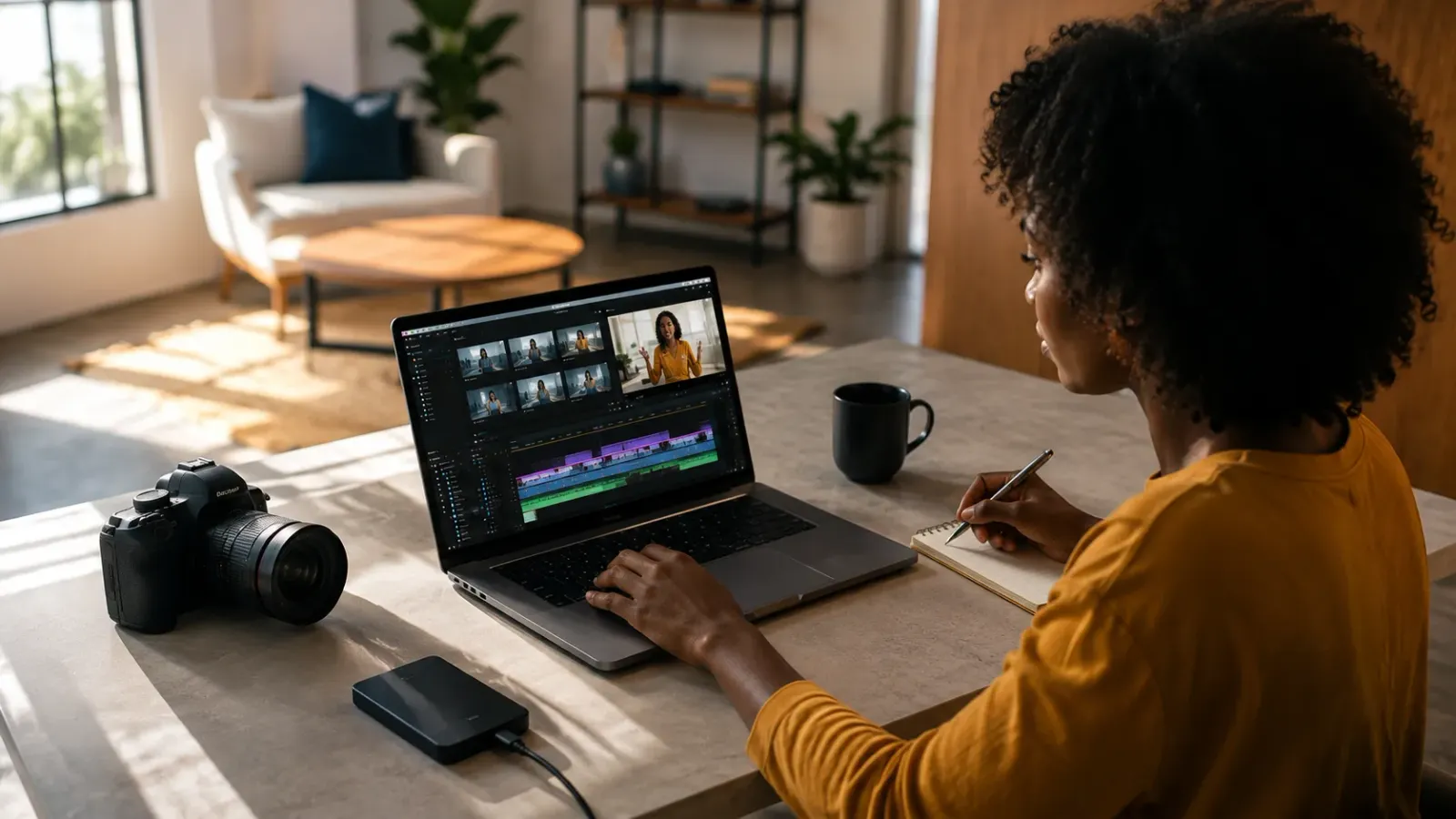
Video Content Repurposing: The 10x Multiplier Framework
Most content creators treat repurposing as something they do when they have time, which means they almost never do it. The 10x Multiplier Framework treats it as the default production model: every recording session is planned with repurposing built in from the start, and every edited asset points toward the next format. This guide covers the full framework and the specific formats each recording type should produce.
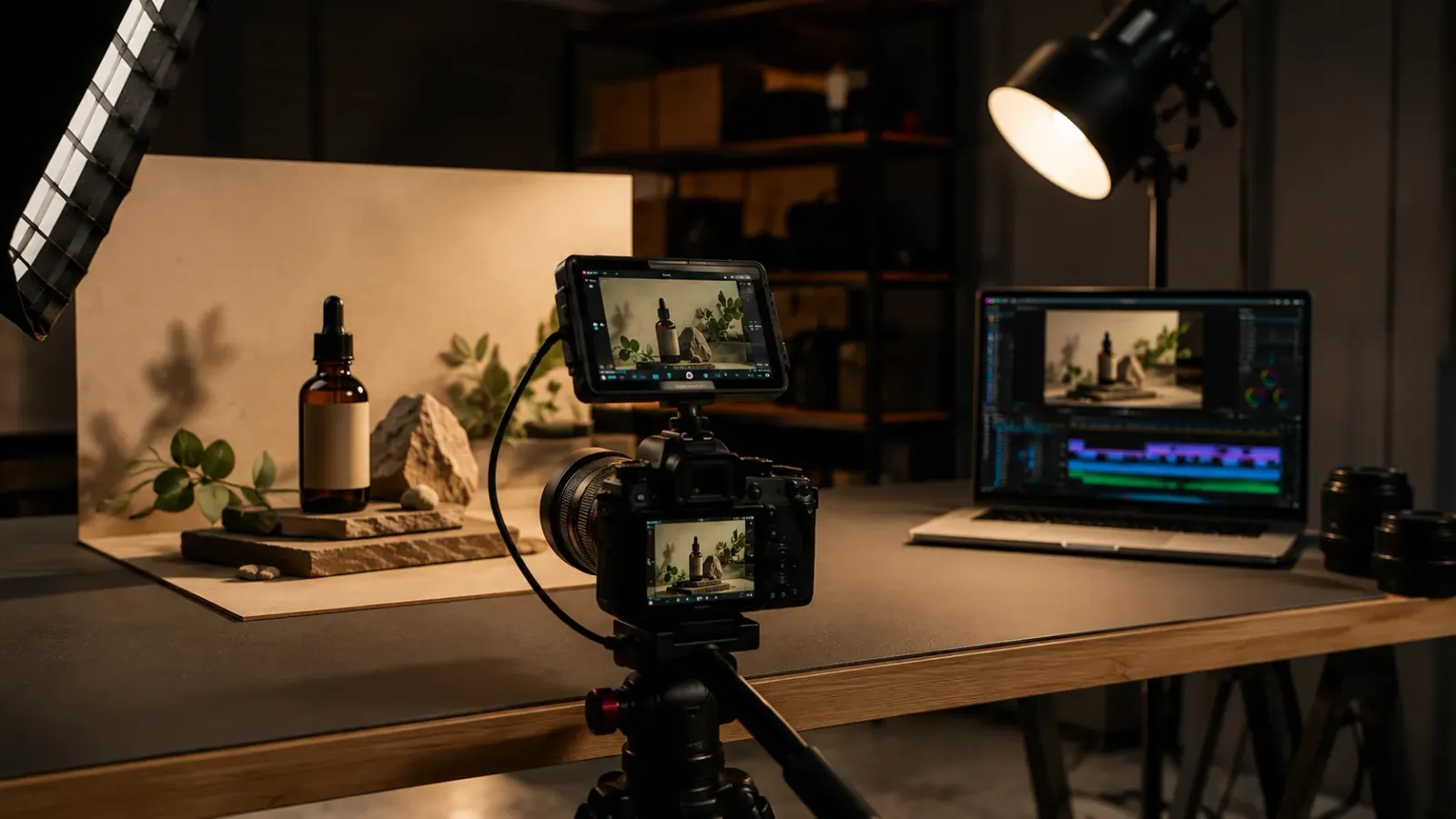
Shopify Product Video: The Editing Checklist That Lowers Bounce Rate
Adding a video to your Shopify product page is not the same as adding a video that lowers bounce rate and increases conversion. Most product videos on Shopify are too long, start too slowly, and are not optimized for silent autoplay on mobile. This editing checklist covers every decision that separates a product video that converts from one that gets scrolled past.
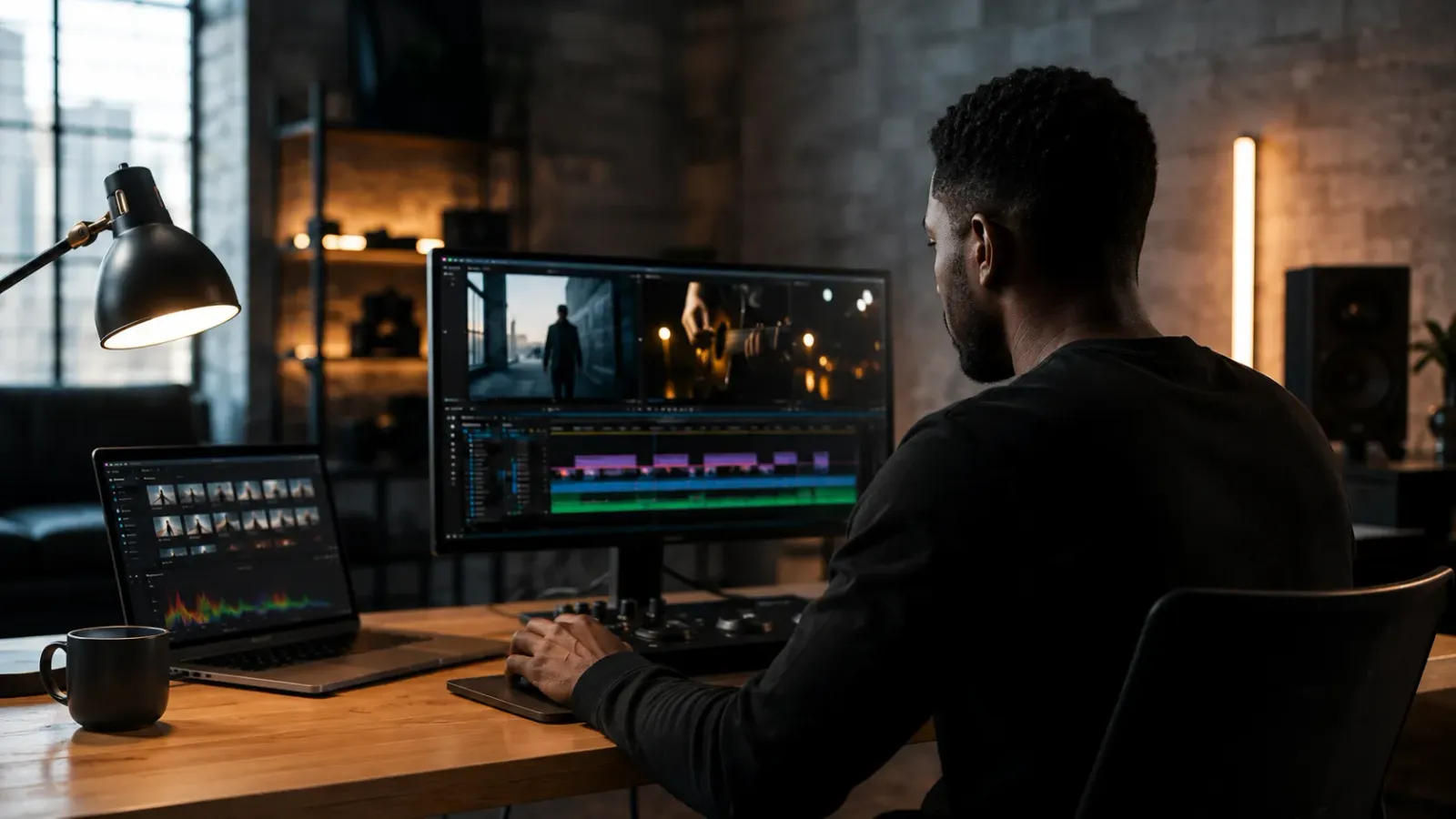
Dedicated Video Editor Service: When a Subscription Beats a Full-Time Hire
Most businesses that are considering hiring a full-time video editor have not run the real numbers. When you include benefits, equipment, software licenses, desk space, and management overhead, a full-time junior editor in the US costs $65,000 to $80,000 per year in total. This guide runs the full cost comparison and identifies the output threshold at which a subscription service wins on economics.
See if Editing Machine is the right fit for your content.
Take 90 seconds to tell us about your goals, content style, and volume. We'll show you which setup fits and exactly where to start.