Hiring Video Editor Talent: The Ultimate Vetting Process
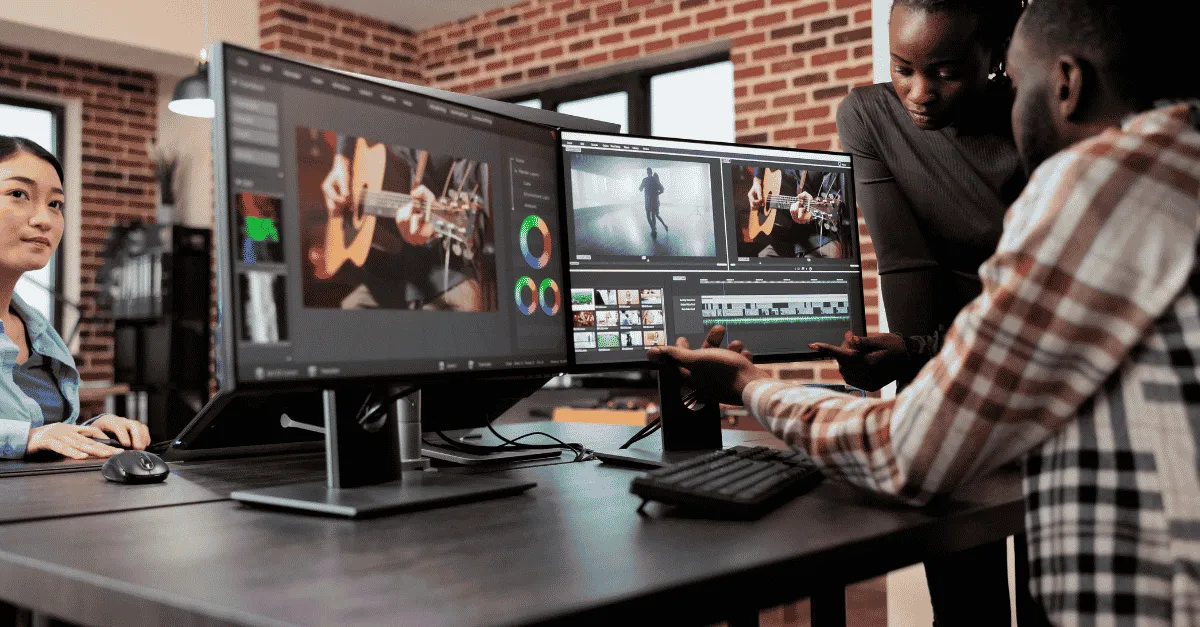
Finding a reliable video editor is often an administrative nightmare plagued by deceptive portfolios, missed deadlines, and freelancer ghosting. To protect your brand and your profit margins, you must move past the "highlight reel" and stress-test candidates using paid projects and strict operational vetting. Learn the ultimate process for hiring video editor talent, and learn why scaling brands are bypassing the freelance marketplace entirely in favor of standardized post-production systems.
Hiring Video Editor Talent: The Ultimate Vetting Process
What is the best process for hiring a video editor?
A foolproof process for hiring a video editor requires moving past their highlight reel and testing their actual operational workflow:
-
Paid Test Project: Assign a small, paid test using raw, unedited footage to evaluate their pacing and technical skill.
-
Communication Audit: Monitor how quickly they respond to the brief and if they ask clarifying questions before starting.
-
Revision Stress Test: Issue a deliberate revision request to see how they handle feedback and manage version control.
-
Deadline Check: Set a strict 24-hour turnaround for the final export to measure their speed and reliability.
Let’s discuss.
For fast-moving direct-to-consumer (DTC) brands and scaling marketing agencies, hiring video editor talent has become one of the most painful operational bottlenecks in the digital ecosystem.
Every founder and creative director eventually reaches a critical inflection point: the media buying budget is scaling, the creative testing requirements are multiplying, and the current internal bandwidth is completely maxed out. You need fresh ad variations yesterday, so you set out to hire a professional.
What usually follows is an administrative nightmare. You are immediately hit with the "highlight reel illusion." In the video production industry, a portfolio is often the least reliable metric of future success.
Any editor, regardless of their actual day-to-day operational competence, can spend an entire month painstakingly crafting a two-minute sizzle reel set to heavy bass music. However, very few of those same editors possess the stamina, organizational skills, and technical proficiency required to deliver ten distinct, perfectly formatted ad variations in a strict 24-hour window.
This creates a massive founder's bottleneck. Every hour a business owner or creative director spends reviewing inflated resumes, interviewing unqualified candidates, onboarding freelancers, and quality-assuring messy test projects is an hour stolen from high-level strategy and revenue generation.
The traditional hiring model is fundamentally broken for modern performance marketing.
This comprehensive guide breaks down the ultimate, bulletproof vetting process to protect your brand from bad hires, while exposing exactly why building a traditional in-house team or relying on freelancers might be the wrong strategic move entirely.
Broken Freelance Hiring Model
To fix your post-production pipeline, you must first understand why the traditional avenues for finding talent are failing modern brands. The freelance ecosystem was not built for high-velocity, data-driven creative testing; it was built for one-off artistic projects.
Marketplace Mirage
When brands need an editor quickly, they inevitably turn to traditional job boards and gig marketplaces like Upwork or Fiverr. This environment presents a mirage of infinite talent. Within an hour of posting a job description, you will receive fifty proposals.
However, the reality is that the vast majority of these applications are automated responses from unqualified candidates who haven't even read your brief. You must manually sift through dozens of generic cover letters, creating an immediate, exhausting administrative burden before a single frame of video is even cut.
Ghosting Epidemic
Even if you manage to find a diamond in the rough on a freelance marketplace, you face the industry's most notorious problem: the ghosting epidemic.
The freelance reality is highly transactional and deeply unreliable. You might spend two weeks interviewing a candidate, officially onboarding them, and training them extensively on your brand guidelines. For the first week, they deliver great work. Then, the moment a higher-paying, short-term gig comes across their desk, they vanish.
They stop answering Slack messages, they miss your critical Q4 campaign deadline, and you are forced to start the exhausting hiring process all over again from absolute scratch.
The Hidden Costs of Hiring
Furthermore, founders rarely calculate the true, hidden costs of hiring an internal editor or a dedicated freelancer. You are not just paying an hourly rate or a salary.
You are paying for Adobe Creative Cloud software licenses, high-end stock footage subscriptions, premium audio libraries, and terabytes of cloud storage.
Most importantly, you are paying for their downtime. If your media buyers do not have new raw footage to provide this week, you are still paying for an editor to sit idle at their desk.
5 Editing Agency Signs It’s Time to Upgrade
How do you know when your current creative hiring model has officially failed? Businesses usually tolerate operational friction until it directly impacts revenue.
If your brand is experiencing any of the following five editing agency signs, your post-production infrastructure is actively holding back your growth.(For a deeper dive into recognizing these symptoms before they impact your revenue, read our guide on 5 Signs You've Outgrown Your Current Video Editor).
1. You Are Consistently Missing Publishing Deadlines
In the algorithm-driven era, consistency is paramount. If your content calendar dictates three YouTube uploads a week, or your media buyer needs fresh creative tests launched every Tuesday morning, a delayed export is a disaster.
If your editor is constantly asking for "just one more day" to finish rendering, your pipeline is broken.
2. Inevitable "Style Drift"
A major warning sign of a bad hire is style drift. You provided the editor with a strict brand profile, exact hex codes, and mandated typography. Yet, by week three, they are using rogue fonts, applying cinematic color grades to raw UGC footage, and ignoring your safe-zone overlays. They are prioritizing their artistic preference over your direct-response marketing rules.
3. You Dread Opening the V1 Draft
When a notification pops up saying "V1 Draft is Ready for Review," you should feel relieved. If you instead feel a sense of dread because you know the video will require ten grueling rounds of micro-revisions, you have hired a button-pusher, not a strategic partner.
4. Chaotic, Decentralized Communication
Professional post-production requires structured workflows. If your editor insists on communicating via chaotic WhatsApp voice notes, sending raw files via expiring WeTransfer links, and losing assets in disorganized Google Drive folders, they lack the operational maturity required to scale a brand.
(To learn how to transition away from this administrative mess, explore Managing a Remote Video Team: Slack vs. Platform).
5. You Are Preparing to Fire Staff Over Volume Perhaps the most common sign of a broken system is the volume ceiling. You have an in-house editor who is great at their job, but they physically max out at three videos a week. Because your media buying team needs twenty variations to combat ad fatigue, you are contemplating having to fire video editor staff simply because they are human beings who need sleep, rather than an infrastructure built for scale.
The Ultimate Vetting Process (If You Must Hire)
If you are absolutely determined to hire an individual freelancer or an in-house employee, you cannot rely on a standard interview. You must stress-test their operational workflow. Here is the ultimate, non-negotiable vetting process.
Step 1: Paid Test Project
Never, under any circumstances, hire an editor based solely on their portfolio link. A portfolio shows you their best work over a five-year career; it does not show you what they can produce on a Tuesday afternoon with mediocre footage.
You must issue a standardized, paid test project. Take raw, unedited footage from one of your past campaigns. Give this exact same footage and creative brief to your top three candidates. This isolates the variables, allowing you to objectively compare how different editors handle the exact same raw inputs.
Pay them fairly for their time, but make it clear this is a pass/fail operational test. (To ensure your test project is structured perfectly and yields actionable data, download our framework in How to Brief a Video Editor (Free Template)).
Step 2: Systems and Workflow Check
During the test project, evaluate how they work, not just what they produce. Do they understand timecoded revisions? Do they ask for proxy files, or do they complain that the 4K files are too heavy for their laptop? Do they organize their timeline cleanly?
If an editor is inherently disorganized on their own hard drive, they will eventually introduce chaos into your brand's workflow.
Step 3: "Ego" Stress Test
The biggest killer of agency-client relationships is an editor's ego. The best direct-response editors check their artistic ego at the door; they understand their job is to generate clicks, not win film festival awards.
To test this, deliberately issue a frustrating (but necessary) revision request on the test project. Ask them to completely change the pacing of the first three seconds or swap out the background music.
Monitor their reaction closely. If they push back aggressively, argue with the creative direction, or take the feedback personally, immediately disqualify them. You need an executor, not an auteur.
Why You Should Bypass the Hiring Process Entirely
The ultimate truth of the vetting process is that it is exhausting, highly fallible, and incredibly expensive in terms of time. You can spend a month executing the perfect paid test project, finally hire the winning candidate, and they might still quit three weeks later.
For brands and agencies optimizing for speed and scale, the most strategic move is to stop trying to hire a "unicorn" individual and instead plug into a guaranteed, standardized system.
Editing Machine’s Solution
Why spend a month vetting an individual when you can plug your raw assets into a pre-vetted, elite global pipeline overnight? Editing Machine was built precisely to eliminate the hiring, managing, and firing lifecycle that plagues the creative industry.
When you create an account with us, you aren't hiring a person; you are subscribing to an industrial-grade post-production infrastructure. We have already done the grueling work of sourcing, vetting, testing, and training the top 1% of direct-response video editors in the world.
Eliminate the Management Headache
We replace chaotic WhatsApp messages and disorganized Google Drives with a single, streamlined client portal. You upload your raw footage, select your hard-coded brand profile, and log off. There are no sick days, no ghosting, and no freelancer ego to manage. We deliver high-converting, perfectly formatted variations overnight, every single time.
Learn how Editing Machine Works here and why it is better than hiring editors.
In Conclusion
Vetting, hiring, and managing video editors is a high-risk, low-reward administrative task that drains energy from your leadership team. Your time is your company's most valuable asset.
You should be spending it on overarching growth strategies, media buying analytics, and client acquisition, not arguing with a freelancer on Upwork about a missed rendering deadline.
Stop wasting weeks reviewing deceptive portfolios and managing unreliable freelancers. Plug into a high-velocity post-production system that actually scales with your media buying ambitions. Create your free Editing Machine account today starting with free credits, and eliminate the creative hiring headache forever.
FAQs
Q: What should I look for when hiring a video editor? A: When hiring video editor talent, you must prioritize operational reliability and workflow compatibility over flashy portfolios. Look for strong, proactive communication skills, a proven ability to strictly adhere to established brand guidelines, the professionalism to execute revisions without artistic ego, and a demonstrated track record of meeting rapid 24-to-48-hour turnaround deadlines consistently.
Q: When is it time to fire a video editor? A: You should prepare to fire video editor staff or freelancers when they exhibit chronic operational unreliability that impacts your revenue. Key indicators include consistently missing publishing deadlines, arguing over necessary creative revisions, ignoring specific brand style guidelines (known as "style drift"), or failing to communicate delays proactively in a professional manner.
Q: What are the editing agency signs that indicate a brand needs a professional partner? A: The primary editing agency signs that a brand needs to transition away from solo freelancers to a professional white-label partner include: being constantly bottlenecked by slow creative output, media buyers lacking sufficient ad variations for high-volume testing, in-house editors burning out from extreme volume demands, and an overall decrease in ROAS due to a sluggish, unreliable post-production pipeline.
More from the Blog
Video Content Repurposing: The 10x Multiplier Framework
Most content creators treat repurposing as something they do when they have time, which means they almost never do it. The 10x Multiplier Framework treats it as the default production model: every recording session is planned with repurposing built in from the start, and every edited asset points toward the next format. This guide covers the full framework and the specific formats each recording type should produce.
Shopify Product Video: The Editing Checklist That Lowers Bounce Rate
Adding a video to your Shopify product page is not the same as adding a video that lowers bounce rate and increases conversion. Most product videos on Shopify are too long, start too slowly, and are not optimized for silent autoplay on mobile. This editing checklist covers every decision that separates a product video that converts from one that gets scrolled past.
Dedicated Video Editor Service: When a Subscription Beats a Full-Time Hire
Most businesses that are considering hiring a full-time video editor have not run the real numbers. When you include benefits, equipment, software licenses, desk space, and management overhead, a full-time junior editor in the US costs $65,000 to $80,000 per year in total. This guide runs the full cost comparison and identifies the output threshold at which a subscription service wins on economics.
See if Editing Machine is the right fit for your content.
Take 90 seconds to tell us about your goals, content style, and volume. We'll show you which setup fits and exactly where to start.