Building Strict Video Production Guidelines for Your Team
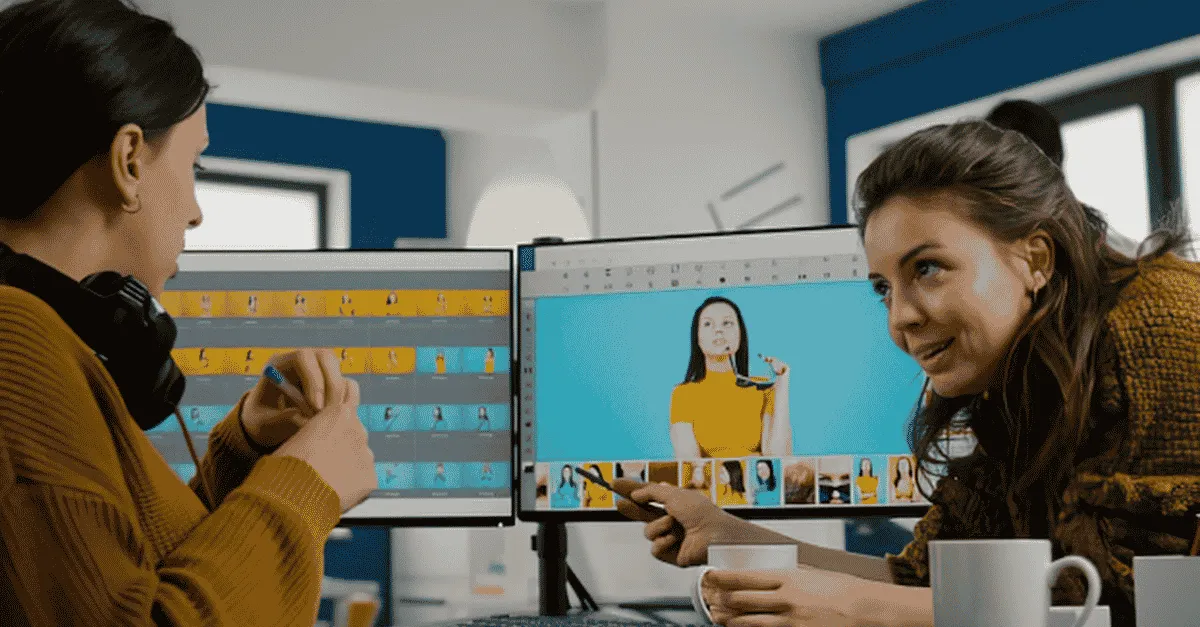
Relying on tribal knowledge or subjective taste to manage your post-production guarantees endless, frustrating revision loops. To scale your content velocity, you must transition from a chaotic artistic approach to a standardized system. Learn how to build strict video production guidelines (detailing exact typography, algorithmic pacing rules, and audio baselines) so any editor can perfectly replicate your brand's aesthetic on day one.
Building Strict Video Production Guidelines for Your Team
What should be included in video production guidelines? To build effective video production guidelines that eliminate post-production errors, you must document four core elements:
-
Visual Typography: Define exact brand fonts, hex codes, and font weights for all kinetic text and lower thirds.
-
Algorithmic Pacing Rules: Establish strict timing limits for cuts, dead-air removal, and B-roll frequency.
-
Audio Specifications: Standardize acceptable decibel levels, background music genres, and noise-reduction parameters.
-
File Organization: Create a universal naming convention and folder structure for raw asset delivery.
Let’s discuss this topic further.
You just received version three of a promotional video from your freelance editor, and your stomach immediately sinks. The caption fonts are still the wrong weight, the background music is completely drowning out your dialogue, and they use a cheesy transition effect that completely undermines your brand's premium authority.
You are incredibly frustrated, but if your agency or coaching business is operating without a formalized post-production system, the fault is ultimately yours.
When you rely on tribal knowledge (keeping your brand’s aesthetic locked exclusively inside your own head) you create an impossible operational standard.
You are forcing your editors to guess what you want, leading to endless revision loops, mounting frustration, and missed publishing deadlines. To eliminate this internal friction, you must establish comprehensive video production guidelines that dictate the exact technical and creative parameters of your content. Without this documentation, scaling your output across multiple editors is a mathematical impossibility.
The secret to scaling your content velocity without resorting to micromanagement is documenting a rigid editing style guide.
This operational playbook reveals exactly how to build the ultimate video editing sop (Standard Operating Procedure) to bulletproof your post-production pipeline.
(If you are currently struggling with the psychological toll of managing this chaos and fighting with freelancers, read Outsource Editing to Cure Creator Burnout).
Why You Need a Video Editing SOP Before You Hire
Before you post a job listing for an editor or sign a contract with an agency, you must build your foundational infrastructure. Hiring an editor to "figure out your style" is a recipe for expensive disappointment.
"Subjective Art" Fallacy
There is a pervasive myth in the creative industry that video editing is purely a subjective art form, driven entirely by feeling and intuition. While high-level storytelling requires artistic nuance, corporate and creator video editing is not an art project; it is a replicable brand asset.
For high-ticket coaches and marketing agencies, editing is a science governed by strict psychological and visual rules. When you view editing as an objective system rather than subjective art, you remove the emotional friction of giving feedback. An editor didn't make a "bad artistic choice"; they simply "deviated from the documented brand profile."
Eliminating the Revision Loop Bottleneck
In a disorganized post-production environment, the standard revision loop is a nightmare. The editor sends a draft, the founder watches it and writes a long email of notes, the editor fixes it, sends a second draft, the founder notices a new error, and the cycle continues. This 5-round revision process destroys your profit margins and content velocity.
A documented video editing SOP acts as a definitive checklist. Before an editor ever exports a draft, they check their timeline against your documented rules. By front-loading the expectations, you drastically reduce a 5-round revision nightmare into a seamless, 1-round approval process.
Lightning-Fast Onboarding Speed
When you scale, you will inevitably need to add more editors to your roster. If your style lives in your head, onboarding a new editor requires weeks of hand-holding, shadowing, and fixing their mistakes.
Conversely, when you possess a strict style guide, you possess true operational leverage. You can hand a 10-page document to a brand-new editor in a different time zone and have them perfectly execute your brand's visual identity within hours of their start date.
Structuring Your Video Production Guidelines
A functional style guide must remove all ambiguity. It cannot contain vague instructions like "make it look energetic" or "use our brand blue." It must be deeply technical and highly prescriptive. Your document should be divided into four core pillars.
Section 1: Visual Identity (Typography & Color)
Brand recognition is built on absolute visual consistency. Your editors should never have to guess what colors or fonts to use on your kinetic text captions or lower-third graphics.
-
Exact Hex Codes: Do not say "use red." Different editors will select wildly different shades of red based on their monitor calibration. You must document the exact, six-character hex code (e.g., Primary Brand Red: #E63946).
-
Typography Architecture: Specify the exact font families. For instance: "All primary headline text must be Montserrat (Black weight). All secondary subtitles must be Open Sans (Regular weight)."
-
Accessibility Formatting: Mandate that all text must have a contrasting drop shadow or a hard black stroke. This ensures that if the video cuts to a bright white background, your white text remains 100% legible, maintaining strict video accessibility standards.
Section 2: Algorithmic Pacing & Cuts
Pacing is the heartbeat of viewer retention. If your editor leaves too much dead air, your audience will scroll away. Your SOP must define the mathematical rhythm of your content.
-
Dead-Air Removal: Establish a strict tolerance for silence. For example: "All breaths, stutters, and pauses longer than 0.5 seconds must be aggressively jump-cut."
-
Visual Pattern Interrupts: The human eye requires constant stimulation to remain engaged on digital feeds. Dictate the frequency of visual changes. A common rule is: "The screen must visually change every 3 to 5 seconds. This can be achieved via a digital zoom (punch-in), B-roll overlay, or a dynamic text pop-up."
-
Transition Restrictions: Limit the creative freedom regarding transitions. Explicitly state which transitions are approved (e.g., hard cuts, J-cuts, simple cross-dissolves) and explicitly ban amateur effects (e.g., no star wipes, no aggressive page peels).
Section 3: Audio Engineering Standards
Poor audio will force a viewer to click away faster than poor video quality. Your guidelines must establish strict audio engineering baselines so your final exports sound like a premium broadcast.
-
Decibel (dB) Baselines: Editors must balance audio levels uniformly. Document the exact targets: "Primary spoken dialogue must peak between -6dB and -3dB. All background music must be ducked to peak no higher than -25dB to ensure the speaker is never drowned out."
-
Music Selection Guidelines: Specify the mood, tempo, and acceptable genres of your royalty-free music. Better yet, create a pre-approved folder of 20 audio tracks and instruct your editors they may only pull music from that specific library.
-
Noise Reduction: Mandate the use of vocal isolation or noise-reduction plugins to eliminate air conditioning hums and room echoes from raw recordings.
Section 4: Safe Zone Geometry
A beautiful video is useless if the platform's native interface covers up your text. Every social media platform (TikTok, Reels, Shorts) has specific UI overlays, such as engagement buttons on the right side and descriptions at the bottom.
- The Y-Axis Mandate: Your SOP must explicitly state spatial geometry rules. For vertical 9:16 video, instruct your team: "All kinetic text, emojis, and critical visual graphics must be anchored to the center-middle third of the canvas. No text may appear in the bottom 25% of the screen under any circumstances."
Managing Assets: Folder and Naming Conventions
The fastest way to derail a post-production team is through chaotic file management. If an editor goes on vacation and a new editor steps in to make a quick revision, they cannot spend three hours digging through a hard drive trying to find the right project file.
The Chaos of "Video_Final_v4.mp4"
We have all seen it: a messy folder filled with files named ad_draft1.mp4, ad_final.mp4, and ad_final_ACTUAL_FINAL.mp4. This lack of naming structure causes catastrophic version control issues, leading to agencies accidentally uploading rough drafts to paid advertising campaigns.
Standardizing Nomenclature
Your SOP must enforce a universal naming structure for raw camera files, Adobe Premiere project files, and final exports. A professional naming convention acts as a digital filing cabinet.
Establish a strict syntax, such as: [Date]_[Client/Brand]_[Topic]_[Platform]_[Version].
- Example: 20260603_EditingMachine_OutsourcingGuide_Reels_v1.mp4
Enforcing this structure allows any team member to instantly identify the date the video was cut, who it is for, what the subject matter is, where it is being published, and what revision stage it is currently in.
(If you are looking to document internal systems across your entire company beyond just video, review How to Create SOPs With Video for Your Content Team).
Moving from Static SOPs to Standardized Platforms
While creating a comprehensive Google Document outlining your video production guidelines is a massive step forward, it still relies on human compliance. A static document is great in theory, but freelance editors often ignore it, rush through their workflow, and require you to constantly police their output.
The Problem with Google Docs and Freelancers
When you manage solo freelancers, your SOP is only as strong as your willingness to enforce it. If your editor delivers a video with the wrong hex code, you still have to spot the error, flag it, write an email, and wait for the revision.
You have built the system, but you are still trapped managing the people within it. (To fully understand the strategic transition away from this management style, read An Expert's Guide to Outsourcing Video Editing in 2026).
Editing Machine "Brand Profile"
To achieve true operational freedom, you must move your guidelines out of a static document and into a standardized technological pipeline.
At Editing Machine, we have digitized the entire concept of the video production guideline. When you onboard with our platform, you don't just hand us a PDF. You build out your secure Brand Profile directly inside our centralized [How It Works Page] portal.
You input your exact hex codes, upload your custom typography, define your algorithmic pacing rules, and set your safe-zone parameters. Once your profile is locked, it acts as the hard-coded law for our entire post-production pipeline.
Our hybrid team of AI processing tools and elite human creative directors uses your customized profile to execute your edits. They cannot deviate from your defined brand rules, guaranteeing absolute consistency at high volume. You eliminate the need to police freelancers, ensuring every video delivered to your dashboard is perfectly aligned with your visual identity.
Learn how Editing Machine works here.
In Conclusion
Stop relying on your memory to maintain your brand's aesthetic. If your editing rules only exist in your head or in a loose chain of Slack messages with a freelancer, your business cannot scale.
To transform your video production from a chaotic, subjective art project into a predictable, well-oiled machine, you must meticulously document the manual. By defining your typography, enforcing algorithmic pacing, standardizing audio, and controlling file nomenclature, you bulletproof your workflow against errors and endless revision loops.
Tired of policing freelancers who constantly ignore your style guide? Stop managing people and start leveraging systems. Lock your rules into the Editing Machine portal and let our hybrid pipeline guarantee your visual consistency at scale.Create your Editing Machine account today to completely automate your quality control.
FAQs
Q: What are video production guidelines? A: Video production guidelines are a documented set of strict technical and creative rules that dictate exactly how a brand's visual content should be filmed and edited. They eliminate subjective guessing by explicitly defining typography, exact color hex codes, audio decibel levels, and precise pacing requirements, ensuring uniform, broadcast-quality output across multiple editors or team members.
Q: Why is an editing style guide important for agencies? A: An editing style guide is absolutely critical for agencies because it prevents "style drift." When multiple freelance editors are working on a single client account over several months, a documented guide ensures that every single video looks and sounds perfectly consistent. This protects the agency's overarching quality control and drastically reduces the time and money wasted on internal and client-facing revisions.
Q: What should be included in a video editing SOP? A: A comprehensive video editing sop (Standard Operating Procedure) should include precise typography rules (approved font families and hex codes), geometric safe-zone layouts for various social media platforms, strict audio mixing targets (dialogue vs. background music levels), algorithmic pacing instructions (such as mandatory dead-air removal), and standardized file naming conventions to organize raw and exported assets.
More from the Blog
Video Content Repurposing: The 10x Multiplier Framework
Most content creators treat repurposing as something they do when they have time, which means they almost never do it. The 10x Multiplier Framework treats it as the default production model: every recording session is planned with repurposing built in from the start, and every edited asset points toward the next format. This guide covers the full framework and the specific formats each recording type should produce.
Shopify Product Video: The Editing Checklist That Lowers Bounce Rate
Adding a video to your Shopify product page is not the same as adding a video that lowers bounce rate and increases conversion. Most product videos on Shopify are too long, start too slowly, and are not optimized for silent autoplay on mobile. This editing checklist covers every decision that separates a product video that converts from one that gets scrolled past.
Dedicated Video Editor Service: When a Subscription Beats a Full-Time Hire
Most businesses that are considering hiring a full-time video editor have not run the real numbers. When you include benefits, equipment, software licenses, desk space, and management overhead, a full-time junior editor in the US costs $65,000 to $80,000 per year in total. This guide runs the full cost comparison and identifies the output threshold at which a subscription service wins on economics.
See if Editing Machine is the right fit for your content.
Take 90 seconds to tell us about your goals, content style, and volume. We'll show you which setup fits and exactly where to start.