Secure Video Editing Services: Why Enterprise DTC Needs an NDA-First Partner
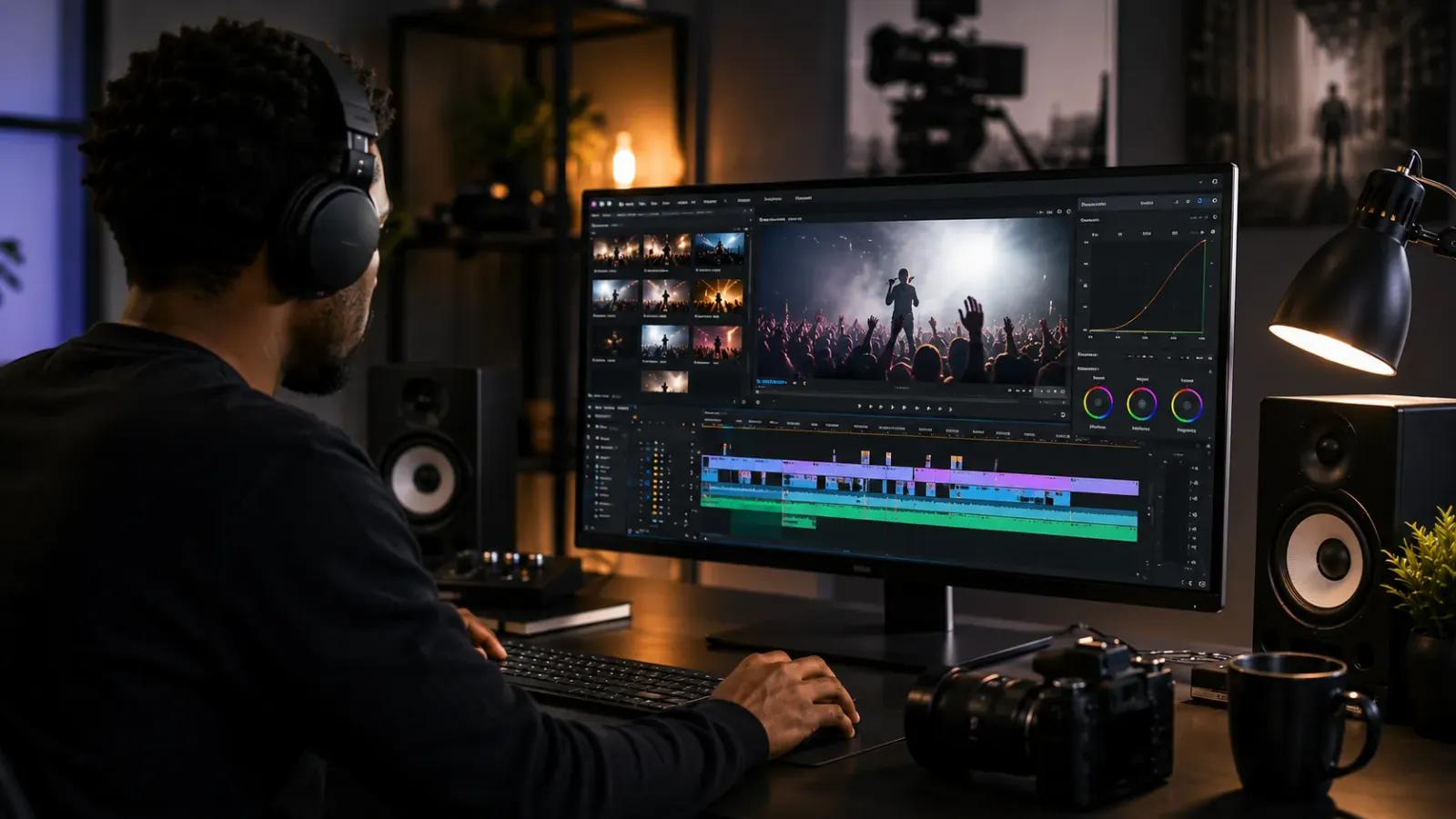
Most video editing services have no formal position on confidentiality. Your raw footage, unreleased product campaigns, and creative strategy sit in someone else's cloud storage under terms you have probably never read. This guide covers what a genuinely secure, NDA-first video editing partner looks like and the five questions you should ask before handing over a single file.
What Makes a Video Editing Service Secure? A secure video editing service operates under a formal NDA, handles raw footage through encrypted transfer and storage channels, restricts file access to named team members only, and has documented data-handling policies covering retention, deletion, and breach notification. The standard is not whether a service uses cloud storage. It is whether your pre-release footage is treated as confidential business information with contractual and technical protections to match.
Key Takeaways:
Most Services Have No NDA Policy: The majority of video editing subscriptions have no formal confidentiality terms. Your raw footage lives in their cloud storage under standard consumer terms with no breach notification obligation.
Pre-Release Footage Is a Competitive Asset: Unreleased campaign footage, product demos, and ad creative represent real commercial value. A data breach or unauthorized disclosure before launch can directly harm revenue and brand positioning.
NDA Is the Baseline, Not the Standard: A legitimate enterprise editing partner treats a mutual NDA as a standard contract term, not an unusual request. If a service treats your NDA ask as difficult or unusual, that tells you what you need to know.
The Confidentiality Gap in Video Production
Enterprise DTC brands, performance agencies, and growth-stage companies spend significant resources producing video creative before campaigns launch. The raw footage from those shoots, the unreleased product close-ups, the unaired ad hooks, the unpolished campaign variants being tested, is commercially sensitive by any reasonable definition.
Yet the majority of video editing services, including many that serve enterprise-level clients, have no formal NDA policy, no documented data handling standards, and no breach notification obligation. Your footage goes into their cloud storage under the same terms as a freelancer's personal photos.
This is not a hypothetical risk. It is a structural gap that exists across the industry and that most brands only think about after something goes wrong. The purpose of this guide is to define what genuine security actually looks like in a video editing partnership, and to give you the specific questions that separate services that take it seriously from those that do not.
Chapter 1: Why Pre-Release Video Footage Requires Enterprise-Grade Handling
The raw footage from a DTC product shoot typically contains:
● Unreleased product designs and packaging before market launch
● Campaign messaging and brand positioning before competitive response is possible
● Ad hook variants being tested before the market sees them
● Talent appearance and likeness captured under specific usage rights
● Pricing and offer structures being tested before public announcement
Any of these, if disclosed before your intended release, represents real commercial harm: a competitor adjusting their positioning in response to your forthcoming campaign, a talent dispute arising from unauthorized distribution of appearance footage, or a pricing strategy becoming public before you are ready to defend it.
The editing service that holds your raw footage is holding all of this. The question is whether their contractual and technical practices treat it accordingly.
Chapter 2: What a Genuine NDA-First Editing Partner Looks Like
Contractual Standards
A genuine NDA-first editing partner includes mutual non-disclosure terms in their standard service agreement, not as a special addendum you have to request. The NDA should cover:
● A clear definition of confidential information that explicitly includes raw footage, creative briefs, and campaign strategy
● A permitted use clause restricting use of your materials to editing purposes only
● Named-access restrictions specifying which individuals can access your project files
● A defined retention period stating how long your footage is stored after project completion and what deletion process applies
● A breach notification clause specifying the timeline and process for informing you if unauthorized access occurs
If a service does not have a standard NDA, or treats your request for one as unusual, that is a meaningful signal about how they think about client data.
Technical Standards
Beyond the contractual layer, a genuinely secure editing service applies technical controls that match the commitment on paper:
● File transfer via encrypted channels rather than public download links or consumer cloud services
● Access logging that records who has accessed your project files and when
● Role-based permissions so that only the editors assigned to your project can access your raw footage
● Storage on infrastructure with encryption at rest, not just in transit
For more on the practical side of secure file transfer for video production, including which tools meet enterprise standards and which do not, see our guide on Best Tools for Sharing Large Video Files in 2026.
Chapter 3: The Brand Safety Dimension
Security is not only about data breaches. For enterprise DTC brands and growth-stage companies with significant brand equity, the editorial conduct and public reputation of your editing partner is also a form of brand safety risk.
A video editing service whose public content, social media presence, or industry reputation is associated with gossip, sensationalism, or tabloid-adjacent material creates a reputational adjacency risk for clients who share a commercial relationship with them. In a category where trust and discretion are implicit requirements, the service's own public conduct is relevant information.
The deeper argument for this is laid out in our guide Why Your Video Editor's Reputation Impacts Yours, which covers both the reputational and the contractual dimensions of choosing a production partner whose conduct you would be comfortable explaining to a client or board.
Chapter 4: Five Questions to Ask Before Signing with an Editing Service
These five questions will surface the gap between services that take confidentiality seriously and those that treat it as an afterthought:
1. Do you have a standard NDA that covers raw footage and creative materials?
A legitimate secure service has this ready. A service that has to draft something from scratch on request, or that asks why you need one, does not have a real confidentiality program.
2. Who has access to my raw footage and how is that access managed?
The answer should include a specific number of named individuals and a description of access controls. A vague answer like everyone on the team or our editors does not meet an enterprise standard.
3. How are files transferred and stored?
Transfer should be via encrypted channels with access controls, not a public WeTransfer link or an open Google Drive folder. Storage should be encrypted at rest. The service should be able to name the infrastructure they use.
4. What happens to my files after the project is complete?
There should be a documented retention period and a defined deletion process. Files retained indefinitely on a third party's server represent ongoing risk with no corresponding benefit.
5. What is your breach notification process?
A service that has thought about security will have an answer to this question. A service that has not will be answering it for the first time in the moment you ask it.
For the broader framework of evaluating any editing partner before committing your production volume to them, see our comprehensive guide on An Expert's Guide to Outsourcing Video Editing. And for DTC brands managing high creative volume alongside these security requirements, our piece on High-Volume Creative Testing: The 2026 DTC Playbook covers how to run a high-velocity testing operation without sacrificing the controls that protect your pre-release assets.
Frequently Asked Questions
Q: What is a secure video editing service?
A: A secure video editing service operates under a formal NDA, stores and transfers your raw footage using encrypted channels, restricts file access to named team members only, and has documented data-handling policies covering retention, deletion, and breach notification. It is distinct from a standard editing service in its contractual and technical treatment of pre-release footage.
Q: Why does NDA compliance matter for DTC video editing?
A: DTC brands produce unreleased product footage and campaign assets weeks before launch. If raw footage is stored insecurely or accessed by unauthorized parties, competitors or media outlets could access pre-release product information or creative strategy. An NDA-first editing partner treats your footage as confidential business information from the moment it is uploaded.
Q: What should a video editing NDA include?
A: A video editing NDA should cover: definition of confidential information (raw footage, briefs, creative strategy), permitted use (editing purposes only), named-access restriction, storage and transfer standards (encrypted channels, no public links), retention period, and breach notification procedures.
Q: How do I verify that a video editing service is truly secure?
A: Ask for a copy of their standard NDA before signing. Confirm file transfer uses encrypted channels rather than public download links. Ask how many people have access to your raw footage and whether access is logged. A legitimate secure service will answer all of these questions without hesitation.
Your pre-release footage deserves the same protection as any other confidential business asset. Editing Machine operates under standard NDA terms, uses encrypted file handling, and restricts raw footage access to named project team members only. See how our process works.
More from the Blog
Video Content Repurposing: The 10x Multiplier Framework
Most content creators treat repurposing as something they do when they have time, which means they almost never do it. The 10x Multiplier Framework treats it as the default production model: every recording session is planned with repurposing built in from the start, and every edited asset points toward the next format. This guide covers the full framework and the specific formats each recording type should produce.
Shopify Product Video: The Editing Checklist That Lowers Bounce Rate
Adding a video to your Shopify product page is not the same as adding a video that lowers bounce rate and increases conversion. Most product videos on Shopify are too long, start too slowly, and are not optimized for silent autoplay on mobile. This editing checklist covers every decision that separates a product video that converts from one that gets scrolled past.
Dedicated Video Editor Service: When a Subscription Beats a Full-Time Hire
Most businesses that are considering hiring a full-time video editor have not run the real numbers. When you include benefits, equipment, software licenses, desk space, and management overhead, a full-time junior editor in the US costs $65,000 to $80,000 per year in total. This guide runs the full cost comparison and identifies the output threshold at which a subscription service wins on economics.
See if Editing Machine is the right fit for your content.
Take 90 seconds to tell us about your goals, content style, and volume. We'll show you which setup fits and exactly where to start.